Tuesday, 2 July 2013

If we must create money, let's use it for something useful

It is refreshing to have a new governor of the Bank of England. It doesn't happen very often. Montagu Norman managed to hang onto the job for two whole decades between the wars.

He was one of Jung's patients (Jung famously said he was insane) and there is a strange story about how he crossed the Atlantic in disguise as a 'Mr Skinner' in 1929, for a secret meeting with American monetary officials.  The plan was supposed to have been to introduce a short monetary shock to force USA back on the gold standard. Instead it produced the Great Depression.

All of which is a way of saying that governors tend to be the most conservative of individuals, harking back to the way Things Ought to Be.

The same also seems to be true of some of the commentators.  I was struck by the normally sensible Hamish McRae in the Evening Standard talking about the dilemma about when to move back from the era of loose money (quantitative easing and so on) to the era of tight money again.  I'm sure Mark Carney will be worrying about this, but what really strikes me is how unworldly such a question is - how cut off from the realities.

Neither loose money nor tight money suits the eurozone any more.  The Germans need higher interest rates and the southern European states need lower interest rates.

Neither loose money nor tight money suits the UK any more.  London will soon need higher interest rates and Liverpool or Glasgow need lower.

In fact, there are many parts of the UK which haven't really noticed the effects of the downturn since the banking crisis not because they are too rich - but because nothing much has changed for ten years to lift them out of depression.  The banks long ago stopped lending there.

The truth is that actually single currencies don't suit anyone very well - not nations, probably not even cities, but certainly not whole continents.  More on this another day.

But for that reason at least, I'm sure quantitative easing will remain in place for some time yet, using the Bank of England's ability to create money - but then wasting it by putting it into bank reserves and, via there, bank bonuses, from where it is recycled into higher property prices.

It is a bizarre exercise in the theology of money, rendering the whole exercise pointless - bypassing the parts of the economy it needs to reach - in a tortuous process designed to pretend it isn't happening at all.

The key question for Carney seems to me whether, if we are going to create money, why we don't do something useful with it - like use it to build green infrastructure or for low interest loans for small business.  Just as Canada did in the 1940s so successfully, as it turns out.

So I very much recommend my colleague Josh Ryan-Collins' open letter to Carney pointing out the precedent.  I hope he takes some notice of it.

Monday, 1 July 2013

The next big chapter in world history (and we don’t talk about it)

I've been reading William Morris in the bath.  A satisfying venue, I can tell you.  Specifically, I've been reading his Dream of John Ball, written in 1888.

Morris dreams that he has hurtled briefly back to the Peasants Revolt and encountered the preacher who inspired it, John Ball - and spent the night with him in a darkened church, surrounded by the bodies from the first brief encounter with the enemy, talking about the future.

This is what he tells Ball about his own time:

"Yea, friend," I said, "but in those latter days all power shall be in the hands of those foul swine, and they shall be rulers of all; therefore, hearken, for I tell thee that times of plenty shall in those days be the times of famine, and all shall pray for the prices of wares to rise, so that the forestallers and regraters [monopolists] may thrive, and that some of their well-doing may overflow on to those on whom they live."

That seems to be an amazingly percipient view of our own time and the so-called Trickle Down Effect, which fails to trickle down.

Then, there was the latest Economist edition, with its cover feature about 'The march of protest' , with pictures of successive years of revolution, from 1848 to 1968 and 1989 – and then now.

I did write recently about why this might be, asking why people are so angry these days.  But I think the question is more important than that, because something strange is going on – from the peasants of North Africa to the middle classes of Latin America, this has been a slow burn revolution, but it may be gathering pace.

The Economist says it is because democracies are harder to manage.  This is a typically technocratic interpretation, and I think it begs the question.  In fact, I think Morris' explanation to John Ball is nearer the mark.

Because while Fukuyama was praising the triumph of liberal democracy, a predicting the end of history, a new tyranny was gathering pace.

I think it’s time we gave that tyranny an old-fashioned name, which the medieval scholars used to describe the similar tyranny of finance over life: usury.

I hesitate to use the word, because it makes me sound a bit mad, but it does sum up the challenging narrative of current affairs that seems to make so little impact on mainstream politics.

But we need a word to explain how the financial class has become a new kind of landlord, living off the rents and charges of the financial system which funnel wealth upwards – while real wages, and real salaries, haven’t risen in real terms since 1970, and since 1960 in the USA where the process is most established.  More on this in my new book Broke.

I’m sure the British will be the last people to rise in revolt against all this, but it is a tyranny that will affect them very much. 

My very modest semi is worth nearly half a million pounds.  If my own children are to rent or buy anything approaching it, they will have to work at a job they loathe – probably in financial services – for most of their life (another small way in which financial services is driving out the real economy).

Their dreams will be put on hold, probably forever, as they struggle to rent from the new emerging class of usurious mega-landlords.  This matters, to the middle classes here as much as the middle classes in Brazil.

So why don’t our politicians talk about it?  Partly because the conventional left is most responsible for creating it.  The most disastrous banking deregulation was enacted by Clinton in the USA, and by Blair, Brown and Balls in the UK.

The main efforts of the Labour members of the recent Commission for Banking Standards seems to have been devoted to making sure there was no criticism of the last government, without which the whole narrative becomes incoherent.

And so we wait, without talking about the most important issue of the age, while the global revolt – against a governing class which is too close to the systems of tyranny – very slowly gathers pace.


Sunday, 30 June 2013

Why Crystal Palace is the next Islington, worse luck


Ah yes, the Crystal Palace Festival.  It has been taking place this weekend, and it helped me see the place a little more clearly, even though I've lived there since 1986.

It has crept up on my how much the place has changed.  It is now packed full of the kind of cultural entrepreneurial people I say in my book Broke are going to save the middle classes - and everyone else.  Poets, breadmakers, writers, local publishers, local food distributors, a Transition Towns branch, Green & Browns at Crystal Palace Station, musicians, artists, designers, even a baby sling library, for goodness sake.

What is more, the place was packed without generating extra traffic in the local streets.  This was overwhelmingly homegrown.

Part of the apotheosis of Crystal Palace has been the opening of the Overground line to Hackney, Canada Water and Islington, but that isn't the cause.  You can't conjure up these kind of people in a year or so.

My prediction is that, in fifteen years time, Crystal Palace will be like Islington - exorbitant house prices, lawyers and, given the way our dysfunctional property market squeezes the life out of places, no entrepreneurs at all.

I wonder also whether it is the fact that it is below the radar of local government - an irritation to Croydon and Lambeth which slashed the local library, and a thorn in the side of Bromley which constantly wants to develop the park.  Being on the corner of no less than five boroughs encourages a degree of benign neglect.  I wonder whether, if Crystal Palace had been the heart of the London Borough of Norwood or something, they would have got Lend Lease in to build a shopping centre and destroyed the local economy altogether.

I met a retired senior officer from Bromley Council a year or so ago who agreed with me about the constant stand-off between the council and the residents about the park: the council thought it was a poor people's park - and poor people's parks, as we all know, have to pay their way and are endlessly messed around with and sold off (as in Ankara).  Because Crystal Palace was so far from anywhere, they hadn't realised the ferocity with which people would defend its unkempt, untended, unofficial atmosphere.

So I'm proud to live here.  In another era, I would be undoubtedly be campaigning for a Crystal Palace Unilateral Declaration of Independence.  I just can't face the chore of climbing down onto the Overground to inspect people's passports.

Saturday, 29 June 2013

The secret of where those 1970s motorways came from

My blog yesterday about the roads programme in the 1970s, and what a disaster it was - despite the Treasury's enthusiasm for it in their recent announcement - has brought a whole lot of half forgotten thoughts bubbling, as thoughts do, to the surface.  And some new ones entirely.

First, thanks to Gareth Aubrey, I've read an absolutely fascinating website about the unbuilt motorways and bypasses of Britain.  More about that in a moment.

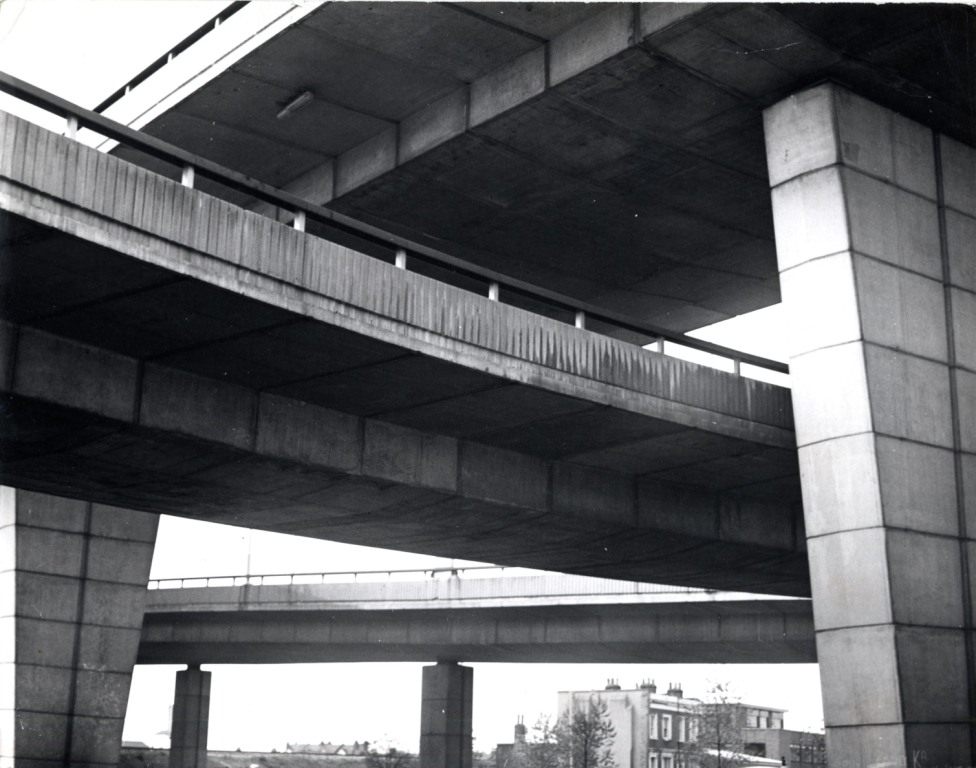
The second thing I remembered was one of the first public meetings I ever went to.  I can't remember where it was exactly, only that it was organised by the Paddington Waterways Society, which played rather an important role in my upbringing, because my mother was the secretary.  It was probably in 1970 and was about the Westway flyover (pictured above), then looming in concrete and bitumen over our neighbourhood in Maida Vale.  I'm not sure how I came to be there.

"It is like a gun aimed directly at Islington," said one contributor, and there just dimly was the idea of how the frenetic road-building of the 1970s had also created the subsidised traffic that soon came to clog it.

And it could have been so much worse, as anyone can see driving along Westway today, with all the blocked exits that never quite became slip roads.  The terrible blight on so many cities by inner urban motorways on both sides of the Atlantic in the 1970s never quite came to fruition in London.

But as the website Pathetic Motorways says, it so nearly did.  This is their description of the extraordinary saga of the London Motorway Box, as the media called it, the little-lamented Ringways plan for London.  It was eventually scuppered when the GLC changed hands in 1975, but it was no coincidence that the Brixton Riots six years later took place in an area that had been blighted for more than a decade by the Motorway Box plan.

All of which is a way of saying that a shiver went down my spine on Thursday when the Treasury announced with pride "the biggest investment in our roads since the 1970s".  Does nobody remember the roads programme of the 1970s?

In fact, given the investment planned on another generation of nuclear white elephants, perhaps nobody remembers the 1970s at all - and Windscale, Dounreay, Torness and all the rest of those vast capital black holes, all bundled up in the huge pot of money we now know as The Deficit.

No institutional memory, that's the problem...

Finally, I had a vague memory about the UK motorway programme, which came to fruition in the 1970s, and where it originally came from.  The answer was a trip which the County Surveyors Society - the driving force behind Britain's road-building programme - made to see the amazing autobahns of Nazi Germany in 1937.  This is what one member of the delegation (R. A. Kidd) wrote some decades later:

"In all it was a wonderful experience, and one appreciated the German efficiency in the organisation of the whole trip.  The imprint on our minds of a concept of a network of motor roads resulted in the County Surveyors' plan for motor roads in Britain, which unfortunately was pigeon-holed by the then Ministry of Transport for many years.  In essence, however, it came to light in the Ministry's ultimate scheme, although the basic origin of this was probably never mentioned, or credit given to the Society." (quoted from A History of the County Surveyors' Society).

You bet it wasn't mentioned, and certainly not in the 1970s - only three decades since the Blitz - but, yes, the original inspiration came from Hitler's autobahns.

Friday, 28 June 2013

Roadbuilding? In the 1970s, it was a disaster

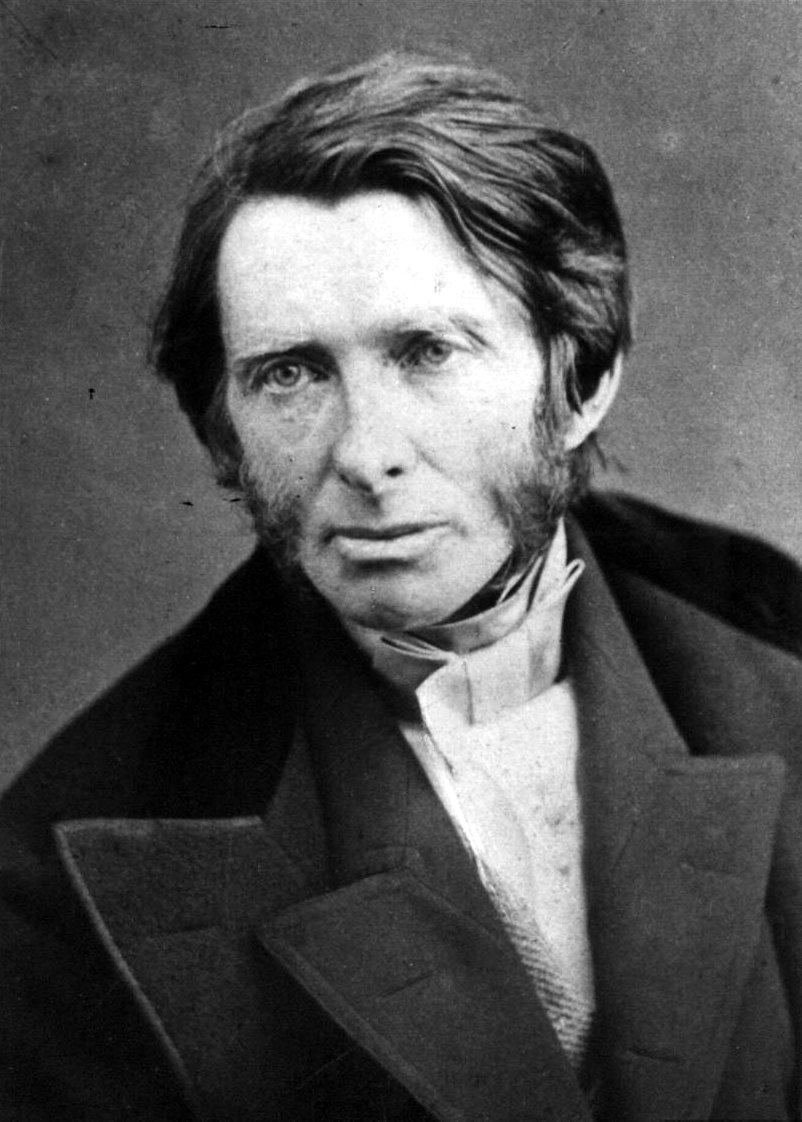
"The valley is gone and now every fool in Buxton can be in Bakewell in half an hour and every fool in Bakewell in Buxton," said John Ruskin when the viaduct across Monsal Dale in Derbyshire was planned.  

Now the viaduct is preserved and I walked over it myself only last month, so Ruskin perhaps misjudged the situation.

But I did think of his words again when I heard details of the infrastructure spending planned by the government yesterday.  The investment in public transport and green energy is tremendously important, partly because it will create local livelihoods for people long after the bulldozers have gone.  

But you have to wonder about HS2, given that just the contingency costs are more than the entire national arts budget.  And most of all, I have been wondering about the boast that the road-building programme is unprecedented since the 1970s.

For those of us who dimly remember the 1970s, the road programme was a disaster.  It increased traffic exponentially (see my blog about transport theorist Martin Mogridge, who worked out that reducing congestion requires reducing roadspace for cars).  It created congestion.  In urban areas, it blighted and destroyed neighbourhoods.  Reports after the nationwide riots in 1981 said that every area where there had been serious rioting had been blighted by plans for urban motorways.

And if they are just bypasses, or pothole filling - as Danny Alexander put it - then why on earth are they being announced from Westminster, and not devolved to local authorities to decide?

But the real question is the one that Ruskin implies: are there actually any economic benefits to roadbuilding?

Yes, they provide work in the building - but there might be more useful ways of spending the money.  Yes, public transport infrastructure certainly helps regeneration because it allows people to live in areas they felt were too remote before.  Yes, high speed railways take people out of planes, which has to be a good thing.  

But is there any evidence at all - beyond the bogus cost benefit analyses that just add things up and never subtract - that more roads increase wealth.

Because, on the face of it, all they do is increase the wealth of big Just-In-Time systems.  On the face of it, they open up new markets for the big supermarkets, at the expense of local business.  Is there really any evidence that this is new money?  Because, as I see it, most road-building simply re-distributes local business to big business.  It is therefore the very opposite of wealth or growth.  It is what Ruskin called illth.

Far from being proud of the road-building programme of the 1970s, nothing went as far as that did to undermining local autonomy and local knowhow.  It played an important part in making some parts of the nation into helpless supplicants to Whitehall.

Pouring our scarce resources into road-building means betting the exchequer on the idea that we are wealthier when we are more frenetically driving everywhere - which encourages the amalgamation of business and therefore reduces employment.  It encourages the big versus the small.

It is precisely the opposite direction to which we should be going, which is gearing up local entrepreneurs to meet local needs - rather than exposing them to takeover by the big delivery machines.

Or am I wrong?  Send me the evidence (no fatuous cost benefit analyses though) and put me out of my misery.

Thursday, 27 June 2013

The way forward for local, asset-based recovery

Danny Alexander announced today the coalition’s plans for job-creating investment, in energy, road and rail infrastructure. 

Some of the priorities seem a little strange (I'll return to the question of whether road-building helps anybody except the road-builders). But it just so happened that, this morning, I was also talking about jobs – at the annual conference of the Centre for Local Economic Strategies in Manchester.  

Richard Kemp was there promising he would push for a Bank of Liverpool.  And I talked about 'asset-based' economics, where economies re-grow using their own resources.  Because, important as conventional job creation investment is, successive governments have forgotten the lost art of growing city economies from the bottom up. This is what I said:

Come back with me for a moment in my time machine to Birmingham in the 1870s.

An experiment was happening there in urban economics that is a bit like the opportunity that lies before us.

Here we are. Reading Far from the Madding Crowd.

Agonising about the farm workers strike.

And talking about the screw manufacturer Joseph Chamberlain.

A populist politician with a monocle and an orchid in his buttonhole.

At the end of 1873, he seized control of a city that was a byword for poverty and filth.

Yes it was the first city of the Industrial Revolution, but it was desperate too.

Overcrowded slums. Poisoned rivers. Occasional water supplies.

Chamberlain and his Liberal colleagues took control from a group of independent councillors who met regularly in a pub called the Woodman.

They had prided themselves on their ability to avoid spending any money at all.  They called themselves the ‘Economists’.

And Chamberlain revived Birmingham.  He paved it. Lit its streets. Infused it with enormous pride. Built parks and galleries and concert halls.

But the key point was that he did it using the assets at his disposal.  The foul water, the money flowing through, the local people.  He didn’t wait for central government grants or plead for corporate sponsorship.  He used the assets he had.

So there’s the shape of our opportunity too.

Because there’s a kind of learned helplessness about British cities now.

They have learned from the Treasury to stay clear of economics.

They have learned to beg for handouts or inward investment.

Neither of which are going to resume any time soon.

So there’s an opportunity. It may be the only opportunity.

It’s to look afresh at what cities have at their disposal.

And use them to stitch together a plan for regeneration that can happen despite the international gloom.

Using the people they have. Replacing their imports. Maximising local money flows.

It is absolutely urgent that they learn to do this, but there isn’t much to go on.

There are examples of what can be done all over the world.  Wadebridge or Bath for energy. Ludlow or Bridport for food. Cleveland, Ohio for local procurement.

But not a lot about how they can all be brought together.

So here’s my list of three things that need to happen first:

First, we need to formulate what we mean as one proposition.

Not as a list of good ideas, but as one asset-based idea.

We know what we’re talking about.  I recently had a strange experience in the lobby of the Treasury with eight of us from the local economics ‘sector’, if I can call it that.

We were meeting for the first time and realised immediately we were taking about the same thing.

We have to set it down, around these kind of propositions: Local institutions, assets, money flows, a sense of place.
  • There is money around, but not nearly enough institutions to invest locally and those which do exist are often too risk averse for growing local markets.
  • There are assets in communities – knowledge, skills resources, land and buildings – that can be harnessed to support local economic development.
  • There is money flowing through the local economy, but when there are few local enterprises and supply chains it tends to flow straight out again.
  • A sense of place, where all the economic levers belong and link together, underpins this approach.
Second task. More difficult this one.

We have to give it a name.

Something not so glitzy that it puts off the serious policy-makers.  Not ‘people power economics’.

But not so complicated that it puts off everyone else.  Not ‘endogenous local growth theory’

When it has a name, we can demand it.  We can say: Boris why aren’t you doing it?  We can hold mayors to account for their failure to do it. We can campaign for it at local level.

And then the third thing. Don’t undersell it.

We have to make no small plans here.  No failure to grasp the significance of what we’re doing.

We need to explain that this asset-based approach to local economics (ooh I named it!) isn’t just a nice thing you might add on to keep the proletariat happy.

It’s the critical factor that can make a difference between wealth and poverty.

And has always done so in the history of cities back through all time.

It is the way not an interesting new approach. It is the way forward.

It is the potential solution to inequality and dependence.

It may look small-scale, but small plus small plus small equals big.

We need to say that simultaneously to the right and left, and to American mayors as the same time as we say it to UK council leaders.

To working classes and middle classes – and I may say I feel particularly strongly about this one.

I’ve just written a book called Broke (shameless plug) and I can tell you this is as urgent for the middle classes as it is for the working classes.

The only people we don’t really need to worry about are the least friendly economists.

Hit them with a logical fork.  Where this asset based approach is tried, it works.  Economists will then either have to pretend it doesn’t work – and make themselves irrelevant - or incorporate it into their world view.

Either way, we win.

But there’s something else too.  Cheap energy has encouraged cities to specialise, based on the economic doctrine of comparative advantage.

They have trucked in their fresh milk and food thanks to the invention of refridgeration (also 1873).

They have flown in their tomatoes and strawberries at Christmas time.

The main reason the shape of cities is going to have to change is the rising cost of energy.

We need to find decentralised sources of energy which no longer waste a third in transmission.  And decentralised food production systems too.

The question is no longer whether aspects of this massive localisation is going to happen, but when it will happen.

That puts cities in the front line of change.

They urgently need the conceptual tools to help them make the shift.

To stop waiting hopelessly around for circumstances to improve or the Chinese to invest.

To make it happen.

And what I think we’re saying to them is this: where people live, then the resources, energy and imagination exist as well.

To create the local wealth they need.

Yes and well-being too, but we don’t need to dilute the message. It is wealth too.

Remember what Joseph Chamberlain said: “Be more expensive,” he urged other councillors.

I don’t think he meant spend more. He meant be more ambitious.

Be more imaginative.  Be more generous.  And I think we can now explain how it can be done.


Wednesday, 26 June 2013

The great housing tyranny

There is always a certain amount of snobbery, inverted and otherwise, about suburban semi-detached homes - especially those built between the wars, with their generous gardens, their little garden gates and garages and their twee stained glass front doors.

They were designed without the aid of architects - their major sin as far as the architectural press is concerned - but they have been probably the most successful house design in our history.  There are other people who don't believe anyone should have a garden.  There are more perverse types who say, like Marie Antoinette, 'let them live in flats'.

Don't believe a word of it.  There is something civilised and dignified about the semi and, yes - since you ask - I live in one myself.

I don’t know exactly what mine cost to buy originally in 1937, but it was somewhere around £700. In those days, the average mortgage cost ten per cent of your income and was paid off in fifteen years.  The gardens were designed in the early years of Ideal Home magazine, to include space for hens.  My own home is almost surrounded by a huge allotment space in northern Croydon.

As I say, it is all very civilised.  But I do ask myself nearly every day how my children will afford anything of the kind - even how they will afford to rent anything of the kind.

This isn’t just a London phenomenon, or just confined to house prices – the same process have pushed average rents in London so far that you need a salary of £38,000 to rent a one-bedroom flat.

If house prices had increased at a civilised rate, my home would now be worth £40,400.  In fact it is nearly worth £500,000, a ludicrous amount.

Which brings us to the latest cabinet 'rift'.  Now, when the newspapers say there is a cabinet rift, it usually means a mild difference of emphasis.  Perhaps the real worry is when they claim there isn't a rift.  The latest rift described in these terms is between Nick Clegg and the Treasury and it is about housing.  This is what he said in an interview with Nick Thornsby on Lib Dem Voice:

"But I totally agree with you that it would be real folly to simply go for easy wins on boosting supply of mortgages that doesn’t lead to supply of new housing. It’s probably one of my greatest frustrations that many of the levers that government can pull in housing can take a very long time to feed through. I’m like a stuck record round the cabinet table." 

Clegg is quite right about this, and new housing is urgently needed.  But there is a misunderstanding here, which is going to be tremendously important, and which seems to be shared by all politicians.  It is the assumption that house price inflation is just a matter of demand and supply, whereas all the evidence is actually that it is about too much money in the system.

Of course, supply of housing isn't irrelevant.  But solve that problem and the house prices will still rise - as they did under Blair and Brown because people were being lent four times joint salaries rather than three times one salary, and as they are now because of bankers bonuses and investors from the Far East.

Yes, we need more homes.  But the reason so many sites with planning permission are not being built is because people can't afford to buy the homes, and they are not in places which can be advertised as good investments in Shanghai and Singapore.

The staggering 20 per cent rise in London rents over the last year is also because of rising property prices - this isn't about home ownership versus renting.  It is about the best way of getting a roof over people's heads, where they need to live and with the maximum amount of control.

I believe that is best provided by mass home ownership.  The idea of a "property-owning democracy" as the basis of human liberty was articulated by Conservatives but derives from renegade Liberals in the Distributist movement in the 1920s, and it is absolutely right.  But it is completely incompatible with allowing our homes to become a tradeable commodity on the international markets.

It is also completely impossible if my small semi is worth half a million pounds, and - far from solving the problem - the Funding for Lending scheme will push up prices to even more tyrannical levels, even if huge numbers of homes are built.

I use the word 'tyrannical' deliberately.  Because people are less free when they have to pay half their income in housing costs or more, less in control of their lives and much less able to follow the career and life path that thrills them most.

This is a far bigger and more potent issue than it seems, and I don't want my children eking out a living in indentured servitude to their landlord, in a job they loathe but need just to pay the rent, and unable to live near where they were born.  It is the very opposite of civilisation.

Find out more in my book Broke.