Tuesday, 11 March 2014

Crimea and its terrifying echoes of Munich

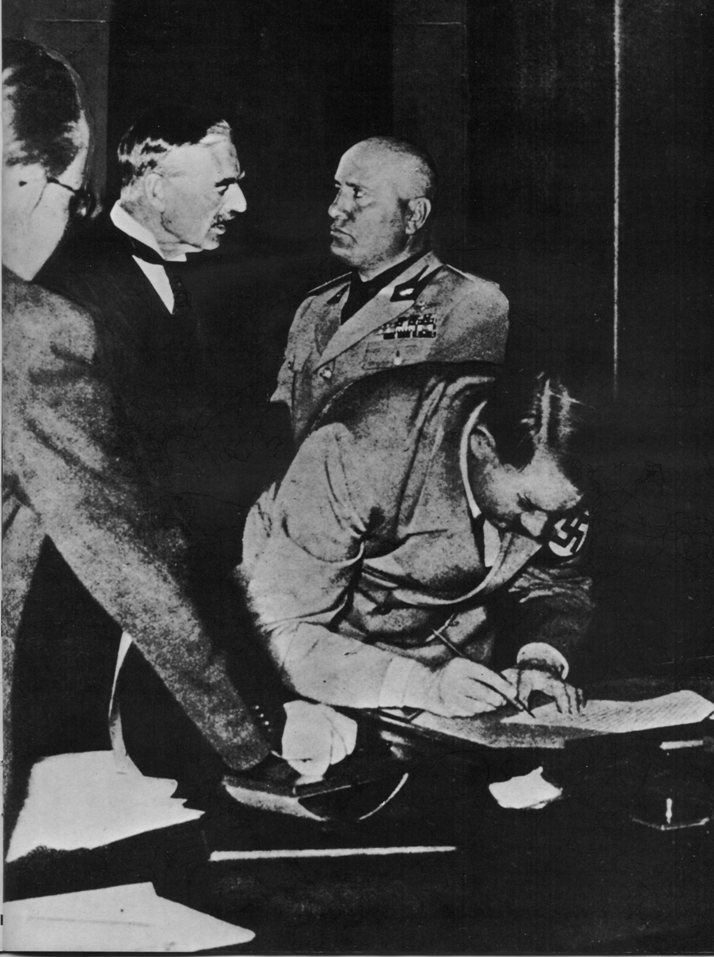
My great-aunt was Observer correspondent in Prague in 1938.  It was said that she wept the whole way home by train after the Munich agreement, as she returned to launch a rather belated Penguin Special called Europe and the Czechs.  By then, Britain and France had agreed to Nazi annexation of the Sudetenland.

I keep thinking of her as the depressing and frightening news from the Ukraine pours in, especially now it seems clear that the Russians seem intent on annexing the Crimea.

It is depressing because of the growing parallels between the two events, just 75 years apart.

The point about Munich was that it was a failure.  It was intended to end Nazi expansion and it only fed the beast, but that only became apparent six months later when they annexed the whole country.  Before that, there was a context of self-determination by the Sudeten Germans which made it seem as if there was a case to answer.

The key question before Chamberlain and Daladier was not whether it was right or wrong to let what seemed to be the majority have its will in the Sudetenland - but: would this be the limit of Nazi territorial ambitions?

That is the great fear about Crimea.  There is clearly a slither of a case for self-determination.  But would taking over the Crimea satisfy Putin, or would it just encourage him to look hungrily at Estonia, Latvia or Georgia?

That is why NATO is now patrolling the airspace in Poland and Romania.  It is why this situation is so dangerous.

It is also why people like Owen Jones, who believe that it would be hypocritical for the West to complain about Russian incursions, are wrong.  It is the most dangerous stand-off since the Russian invasion of Afghanistan in 1979 or the Cuban Missile Crisis of 1962.

We all know that European wars begin in Poland.  It is possible to imagine how Poland could be the source of another one.

But Owen Jones is right that self-determination is too simple a yardstick.  He is also right that we cling to it when it suits us, as it does in the Falklands or the Balkans.  Yet we also promote it when it doesn't suit us.  Scotland springs to mind.  Self-determination is important, but it is more than just winning elections - as any observer of Northern Ireland can see over the past generation.

This is why I remember my great-aunt, Shiela Grant Duff, whose book about the period describes vividly the fake self-determination of the Saar Plebiscite, and the terrible consequences after the vote for those who had opposed unification with Germany.

The question is this: will the Crimea vote be another Saar Plebiscite, with its terrible aftermath?  It begins to look like it will.

Monday, 10 March 2014

The real evil is power without purpose

I am old enough to have worked in the Liberal assembly press office back in 1986, the year of the ‘ten-fingers-on-the nuclear button’ furore which tore apart the Liberal-SDP Alliance.

I remember the raging arguments in the corridor after David Steel’s furious speech, tearing into his own party:

“I’m not interested in power without principles, but I am only marginally interested in principles without power.”

It will certainly be in Duncan Brack’s excellent new Dictionary of Liberal Quotations.

Looking back, now the party has power of a kind, this opposition of power and principles seems to reek of the peculiar culture of Liberals. I’m not even sure it is the right question.

The real problem in Westminster is that it is packed to the gunwhales with highly skilled professional politicians, who are adept at the techniques of gathering power to themselves. They imbibe it in their mother’s milk, have it in their tea at Eton, learn it in the corridors of power as research assistants and special advisors and finally they do it themselves.

The problem isn’t that they are power-crazed tyrants; it is altogether different. They get the power only to find that they haven’t got the foggiest idea what to do with it.

For the sake of argument, let’s call it the Blair Paradox. You might also call it the Brown Paradox, because the two great rivals shared it.

They tweaked the system so much that they were able to gather the reins of the nation’s horse in their hands.

But by then, they had become so much a part of the complex system of government that they found it next to impossible to imagine anything much outside the status quo.

This is important for the Lib Dems because they have survived the trauma of coalition – and it has been an exciting roller-coaster but deeply traumatic at times – by suffusing themselves in the science of political pragmatism.

The sheer intractability of the system drove them to become experts in the details of making things happen in Whitehall. I am impressed by it but nervous about it too.

The bitterest battle at the Lib Dem conference in York was over regionalism, which seems an appropriately Liberal cause to get cross about.

It wasn’t between the people with principles and the people with power, it was between those who wanted to think through the philosophy from first principles, and those who wanted to put up with an untidy solution because that was the only way anything would happen.

Now, it happens that I believe in untidy solutions. They are consistent with localism and with human beings.

But I felt I detected the revival of the logical thinkers at the conference, re-thinking the way the world is.

Was it that, or was it just the last throw of the old defunct causes which we clung to during the 1970s and 1980s?  I don’t know.

But it is important. Liberalism will survive in the long-term by nurturing both kinds of knowledge – the purity of imagination, to see the world differently, but also the hard-headed business of making it happen.

When St Augustine urged us to be as wise as serpents and as harmless as doves, I have a feeling he was talking directly to the Lib Dems.

Subscribe to this blog on email; send me a message with the word subscribe to dcboyle@gmail.com. When you want to stop, you can email me the word unsubscribe.

Friday, 7 March 2014

Four decades on: the besetting sin of Liberals

Exactly forty years ago, the strange final chapter was being played out for the February 1974 general election, which saw Edward Heath holding on in 10 Downing Street while he negotiated with Jeremy Thorpe.

I was preparing for O Levels at the time (a strange prehistoric version of GCSEs, for those who don't remember) and I remember finding myself in instinctive sympathy with the underdog - the Liberals had won six million votes but only 14 seats.  It was a travesty.

Looking back, it was the first time I identified with the Liberal Party, though I didn't actually join for another five years.

It all seems rather a long time ago, over the horizon of history.  So it has been strange reading about the events on the BBC website, and hearing - by sad coincidence - of the death of Marion Thorpe in the last few days.

I was a great admirer of Thorpe's in those days, and have since been lucky enough to meet him and Marion at their home a number of times.

I still think he was, and is, an extraordinary man, despite the events that followed.  But looking back, I wonder if his leadership did not fall into the classic Liberal trap: high intelligence, a compelling presence, but another Liberal ecstacy of positioning rather than anything important to say.

It has been the besetting sin of the party I joined for most of the past century.

I joined in 1979, for two reasons.  One was that I interviewed the Liberal candidate for Oxford for two whole hours at the height of the election campaign, as a student journalist.  By the end of the conversation, I was completely convinced.

But there was another reason.  The stance of the Liberal MPs the previous year, going into the no lobby alone against the reprocessing plant at Windscale, as we called Sellafield on those days.

At least half the reason I joined the party was that it realised, when none of the other Westminster parties did, that nuclear energy would be vastly wasteful and centralising.

Looking back, I couldn't have joined any other party.  I am a Liberal, despite the recent app which allows you to rate your political position, which concluded - despite all evidence to the contrary - that I was a Scottish nationalist (this was not useful advice: it is some years since the SNP fielded candidates in Croydon).

But I've been mulling over my four decades rooting for the Liberals and Lib Dems, since the aftermath of the February 1974 election - almost my entire adult life.  Like most of my friends in the party, we all spend at least as much time frustrated with the party as we do campaigning for it, but usually - being Liberals - for different reasons.

Looking back, I think I came to the conclusion some years ago that - if I was to play any useful role in the party - it would be to try and tackle this besetting sin: the preference for positioning over thought.

Which brings me back to the nuclear issue.  I support the coalition, but no issue has made me more enraged with my own party's besetting sins than the vote in September to back nuclear energy, but without a state subsidy.

Nothing preys on my mind more than that.  The embarrassing self-delusion involved.  The stupid, thoughtless positioning.

As if an industry that produces high level waste without any storage facilities, except its current temporary one on the surface at Sellafield - and without any prospect of storage facilities (three Albert Halls of it so far) - which will stay dangerous for 100,000 years....  As if we can pretend that will involve no subsidy.

So for the sake of Lib Dem positioning, we hand the next 2,000 generations the task of protecting and paying for this stuff - for millennia after the disappearance of any of the companies we are subsidising.

I find it quite staggering that we could have made a decision so transparently delusory, just to help our Secretary of State get over a little political difficulty.

Yet, here I am, four decades after my O Levels, toddling off to the party's conference York.  A strange thought.

Subscribe to this blog on email; send me a message with the word subscribe to dcboyle@gmail.com. When you want to stop, you can email me the word unsubscribe.

Thursday, 6 March 2014

When you measure social issues, they get worse

For reasons some people know locally, I'm only too aware of just how much domestic violence there is, in the UK and beyond.  It is insidious, destructive and much more common than most people think.

But yesterday's mega-survey of the EU, which found that the UK had some of the worst levels of domestic violence (the 5th worst, in fact), has set me thinking about the peculiar effects of counting, and what happens when you take statistics too seriously.

I'm aware that these are not official figures.  They are based on a survey, but the same peculiar effect applies, and I wrote about it in my book The Tyranny of Numbers.

In quantum physics, the mere presence of the observer in sub-atomic particle experiments can change the results. In anthropology, researchers have to report on their own cultural reactions as a way of offsetting the same effect.  Perhaps that is some clue to the peculiar way in which statistics tend to get worse when society is worried about something.

Why, for example, did the illegitimacy figures shoot up only after the war babies panic in 1915? At the time of the panic, the number of illegitimate births was actually astonishingly low – and the number of marriages strangely high. After the panic, the illegitimacy rate suddenly increased.

Why was the number of homes unfit for human habitation in the UK in 1967 (after TV film Cathy Come Home) were almost twice the figures for 1956 – despite over a decade of intensive demolition and rebuilding?

The garrotting scare in the 1860s was the same. The story began during the silly season in August 1862, and public horror got so bad that Punch was advertising a range of fearsome neck-guards with metal spikes to protect your neck. But the increase in the crime statistics came immediately afterwards, once the Garotters Act had brought back flogging for adults.

The tragic death of Stephen Lawrence in a racist attack led to widespread concern about race attacks in London. But after the public inquiry on the subject in 1998, Metropolitan Police figures of race attacks leapt from 1,149 to 7,790 in one year.

It was the same with the sex abuse statistics. They toddled along in the UK at the 1,500-a-year mark until 1984, when an unprecedented wave of publicity on both sides of the Atlantic catapulted the issue to the top of the public agenda. 

Between 1984 and 1985, the NSPCC reported a 90 per cent increase in reported cases, and in the following year they reported a similar rise. 

Child abuse campaigners would say that the actual rate of child abuse is never reflected properly in the statistics. They may well be right – the same would be true of the figures for racist attacks. All I'm saying is that the actual statistics wouldn’t have told you anything, except how strongly the public felt about it at the time. 

So often, the statistics start rising after the panic, rather than the other way round, as an eagle-eyed society tries to stamp out the unforgivable. That’s the Quantum Effect of statistics.

It’s difficult to know quite why the figures go up. Sometimes the definitions change to reflect greater public concern. Sometimes people just report more instances of it because it is in the forefront of their minds. Sometimes, maybe, what we fear the most comes to pass.

You may be seeing something of the same Quantum Effect in the story about domestic violence.  The figures are high, both official figures and survey results, when people notice domestic violence.  It is high when they define incidents as domestic violence.

On the other hand, the figures are low when society is blind to domestic violence, when they turn a blind eye to it, when they define it as just one of those things.  The statistics may tell the absolute reverse of the truth.

This may be an explanation for why the domestic violence figures seem worse in the liberal Scandinavian countries, where people are very aware of domestic violence and worried about it.

None of this suggests that domestic violence isn't an appalling cancer.  But it does suggest that the figures won't give you a very good guide to it - because they tend to get worse the more worried we are about the issues.

It is a strange phenomenon, and it gets stranger the more we trust the data: the truth is that - the more worried we are about something - the worse the figures get.

Subscribe to this blog on email; send me a message with the word subscribe to dcboyle@gmail.com. When you want to stop, you can email me the word unsubscribe.


Wednesday, 5 March 2014

A whole new kind of brevity in publishing

Alan Turing: Unlocking the Enigma (Kindle Single)Years ago, I went to a palm-reader in Kathmandu - my only visit to anyone remotely like that.  I'm too coy to say here what he told me, except that one of the main elements of my personality was what he called 'brevity'.

This may not be obvious to anyone who has endured one of my lectures.  But it is true that I value brevity as a skill, as one of the only ways of conveying ideas in a sufficiently riveting way.

I was reminded of this today by a very thoughtful review of my ebook Alan Turing: Unlocking the Enigma by Nick Sidwell of Guardian Shorts, which talks about the advantages and disadvantages of writing complex biographies in less than 20,000 words.  There are, after all, longer biographies of Turing you can get your teeth into. This is what Sidwell says:

"If you don’t have time to read one of those longer books: read “Unlocking the Enigma.” If you want to remind yourself of who Turing was before tackling a longer work: read “Unlocking the Enigma.” If you simply want to discover who this often misunderstood man was: read “Unlocking the Enigma.” You will not regret a minute spent in its company. It’s just that if you truly want to learn about Alan Turing, just don’t expect it to be the only book you read on him."

This is a generous way of putting it.  But the truth is the ebook market has turned out more different from mainstream books than I ever expected.  

They tend to be around 20,000 words and to retail for £1.99 or £2.99, and to give the authors much more generous royalties.  It is in this market, which is growing dramatically, that the action is - not the rather expensive end of ebook publishing, dominated by the much pricier electronic versions of real books, published by the old publishers.

In fact, I have ended up - for the first time in my career - in a Top Ten bestseller chart.  This was the Thin Reads top ten of Kindle Singles.  OK, my Alan Turing book seems to have slipped out again this week, but the damage is done - I am now addicted to the Thin Reads Top Ten and can't stop looking at it.

It occurs to me that the two genres, thin reads and fat reads, may actually go off in different directions - the fat reads beautifully published and designed, the thin reads very basic but expertly brief, enough for a few days commuting and for busy people who want some background reading in more depth than they can ever get in a magazine.

In the meantime, if you wanted to test out Alan Turing: Unlocking the Enigma, you can download it onto a computer if you don't have a Kindle - and it only costs £1.99.

All I can do is repeat the review. I have, says Sidwell, attempted "to squeeze an elephant into a dog kennel. On the face of it, it shouldn't fit. Yet, for the most part, he is highly successful".

In fact, the process of squeezing elephants into dog kennels is highly instructive.  It isn't really about summarising; it is about finding the underlying narrative and trying to tell it in a compelling way.

Subscribe to this blog on email; send me a message with the word subscribe to dcboyle@gmail.com. When you want to stop, you can email me the word unsubscribe.

Tuesday, 4 March 2014

Why did PIE confuse people?

There is a difference between liberals and socialists.  Tell me something I don't know.

OK, give me a chance.  The thing is that I've found myself falling back on a peculiar definition of my own that sometimes helps me realise why people are disagreeing.

It is based on their blind spots.  Socialists seem to me to have a blind spot about the abuse of power, hence the inevitable way that Labour governments eventually start restricting civil liberties - and how they fall back on centralised control in any given situation.

It isn't that they are convinced tyrants, or anything like that: they just don't see the problem.

Liberals are alive to the abuse of power at the core of their being, but they tend to be blind to the abuse of money.  Hence their failure to come up with much in the way of distinctive economic ideas since Keynes breathed his last in 1946.

Again, it isn't that they are somehow bankers themselves, they're just not very interested in economics.  They don't see it.

This is a rather roundabout way of writing about the strange story about the Paedophile Information Exchange in the late 1970s, and the involvement of the National Council for Civil Liberties (NCCL).

It is strange to grasp this, because of my youthful appearance, but I can remember the late 1970s rather well.  Flared trousers.  Three TV channels.  Grunwick.  Ah yes, it all comes flooding back.

I was a student at the time and into the more libertarian and anarchic causes, like joining the Liberal Party.  They were the only MPs to vote against the nuclear reprocessing plant at Windscale, as we called it then - of course I had to join.

I remember the debate about PIE in student circles.  I remember thinking it seemed very odd at the time, but don't remember much more about it.  The truth is that I find it quite hard to fling myself back into the attitudes of the time.

I'm only writing about this now because Jonathan Calder was brave enough to do so, remembering the different atmosphere on the political left at the time - the psychological attempts to abolish "the very concept of childhood".

But my rule of thumb for distinguishing liberals from socialists is relevant here.

We are a far more liberal society, in many ways - I'll come back to this - now compared to 1979.  As liberals, we have the advantages and disadvantages of that shift in attitudes.  We are more alive to the abuse of power, and more blind to the abuse of money all around us.

We see child abuse now for what it is - the abuse of power.  We have done so pretty much since the explosion of interest in the issue since 1984, or thereabouts.

But I have been wondering if this was relevant to the mistake that NCCL made at the time.  The people in charge in the late 1970s, and now in the gunsights of the Daily Mail, were socialists and socialists have their own blind spots.  The NCCL trio were clearly alive to the abuse of power or they wouldn't have been working for NCCL in the first place, but even so - I wonder...

It is kind of de rigeur at this point for columnists to add in a defensive condemnation of PIE, explaining - as if we needed to know - that they were wrong.  And of course they were wrong, but it is interesting why they confused people at the time.

As Sam Leith pointed out in the Evening Standard yesterday, this isn't really about Messrs Harman, Dromey and Hewitt.  It is about why society as a whole tolerated PIE back then.

So our collective shift from the naivety of socialists (blind to how power can be abused) to the naivety of liberals (blind to how money can be abused) is relevant here.

Jonathan is quite right to imply that this isn't the whole story.  There is another side to this, and although we are a more liberal society than we were in 1979, I'm not sure we are a more tolerant one in every respect.

It isn't just the way in which a child abuse industry has emerged, terrifying parents who are not confident enough to resist, or the bureaucratic processes that get in the way of actually protecting children.  It is the wider attitudes in society that manages to condemn adultery ever more fervently, that increasingly purses their lips at the way other people bring up their children...

I could go on.  We all know society's new hypocrisies and train our mouths accordingly.


Monday, 3 March 2014

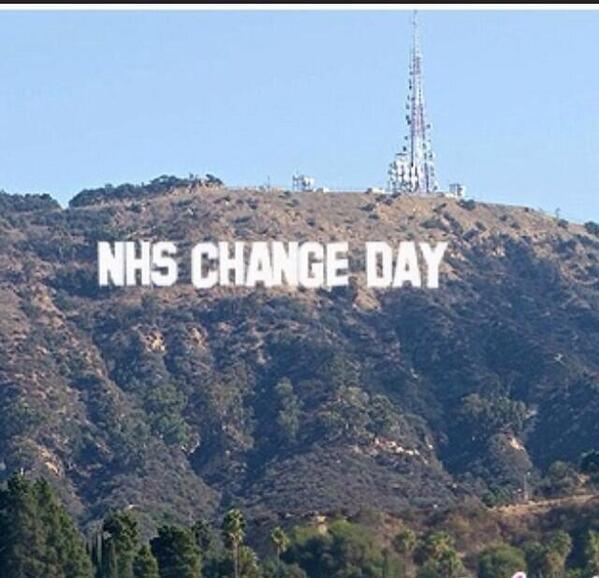
Why NHS Change Day might save money too

It is more than two decades since Al Gore’s National Performance Review during the Clinton years.  It emerged after the scandal of wasteful Pentagon spending, because the cost of simple items ballooned when they went through armed forces bureaucracy - a serious lesson about centralised procurement.

The $7,622 coffee percolator bought by the air force was the most spectacular, but the one that really caught the public imagination was the $436 hammer bought for the navy, or – as the Pentagon called it – a ‘uni-directional impact generator’.

One of the first schemes the Review launched was an annual Hammer Award for public sector employees who had made huge efforts to work more effectively.

That was the point. The Review set out a series of principles for saving money by scrapping rules and bureaucracy and giving power back to staff. Then they urged them to get on with it and told stories about their progress.

Regular newsletters were packed with suggestions. Abandon sign-in sheets and clocking-in machines. Buy equipment locally if you think you can get a good price. Waive the need for travel expense receipts for sums under $75.

One of their key stories was about the Occupational Safety and Health Administration (OSHA) office in Maine, the equivalent of the UK’s Health and Safety Executive. It consistently came top of the league for how much they were doing, for the most citations and fines, yet the workplace safety in the state was still the worst anywhere.

When they realised this, the Maine office created a small revolution. They tackled the most difficult factories first, and created employee teams there to solve the problems. If the companies agreed to support them, they would suspend their inspections and punishments.

The result was that the accident injury rate went down by two thirds. It wouldn’t have been possible without inspiring staff to seek out new ways of doing things – and without a big idea that pointed them in the right direction.  More on the NPR in my book The Human Element.

Reform of public services in the UK has gone mainly in the opposite direction.  It has involved less responsibility for frontline staff, less flexibility, less local imagination.  We have had nothing like Gore's NPR, except perhaps NHS Change Day, which is - fanfare - today!

It is a brilliant example of how you can humanise a service by starting with the human energy below.  The influential NHS blogger Roy Lilley has written a hymn of praise.  I agree with him that this kind of thing won't change the realities of budgets, but absolutely agree that:

"It's a mechanism and a route whereby the frontline staff all over the country get THEIR chance and THEIR voice to give THEIR idea for how to make a difference and for that chance and voice to be equally heard, equally respected and given space to be implemented by their managers and leaders..."

Quite right.  But I'm not sure it is irrelevant to budgets either.  It is the inflexibilities in the system that ultimately waste money, and days like this which can begin to iron them out with the power and energy of people on the frontline.

Subscribe to this blog on email; send me a message with the word subscribe to dcboyle@gmail.com. When you want to stop, you can email me the word unsubscribe.