Wednesday, 9 July 2014

Hysteria leads to more secrets

I've been listening to the Today programme this morning, which is once again dominated by the child abuse issue and the search for Geoffrey Dickens' lost dossier of child abusers in high places.  And one man's name kept popping into my mind: Noel Pemberton Billing.

Billing was a pioneer aviator who became the independent MP for Hertford during the First World War.  He was an arch-conspiracist, an anti-semite and the publisher of a magazine called Imperialist.  In 1918, he published an article by Harold Sherwood Spencer claiming that 47,000 members of the establishment were involved in a homosexual ring, and being blackmailed by German agents to "propagate evils which all decent men thought had perished in Sodom and Lesbia".

Needless to say, the press talked of nothing else.  It was powerful innuendo, and there was much discussion about those young people and children who had been abused who never recovered.  It was widely believed - well, there was some evidence at least: many members of the establishment were gay, after all.

Billing's main targets were Margot Asquith, and beyond her the wider Liberal Party, and anyone with any Jewish affiliations.

The whole affair ended up in court, where Billing represented himself in an action for libel brought by the actress Maud Allen, bringing the infamous Lord Alfred Douglas into the witness box on his side.  He won.

At the heart of his allegations was a similar missing dossier, called the Black Book of Berlin.  The whole affair was designed to undermine the Liberal establishment in Westminster.

I have been reminded of this listening to the BBC in the last few days. This is not because I’m somehow equating homosexuality with paedophilia. But there are still parallels between the two affairs, and one of them is the way that public hysteria gets in the way of the truth.

What worries me is not that the truth must somehow be hidden about these things, but because the main cheerleaders for hysteria and innuendo are now the Church and the BBC – the main offenders in abuse cover-up.

When the guilty start trying to spread blame, then the innocent start getting hurt.  You know there is a hint of this when people who have absolutely nothing to be ashamed of – who took decisions for what seemed like good reasons some decades ago – start getting the full spotlight of investigation raking over their actions.  And when there is just a hint of the House Un-childfriendly Activities Committee which will “leave no stone unturned” (are you now, or have you ever been, a file destroyer?).

The terrible irony about these moments is that those who pull the strings don't suffer, any more than the guilty do. It is the people who get caught in the middle.

Jonathan Calder’s excellent blog last week linked to a story about the satanic abuse panic of 1990.  Satanic abuse, as we discovered later, was not actually happening. It was a fantasy imagined by a combination of fundamentalist Christians and child abuse campaigners, and was a direct result of a joint conference they held immediately before the allegations began to surface.

It now appears that children who were seized by the police – at dead of night, I seem to remember – and taken from loving parents, were placed in care in the Knowl children's home, where real abuse was taking place.  That is what happens when panic takes charge.

In short, I agree with Simon Jenkins this morning:

"We deal with sex crimes by licensing anonymous accusers and staging celebrity show trials, with lawyers in gladiatorial legal combat before juries. From the attendant publicity, no reputation survives. It is judicial barbarism.  The drift of the May inquiries will divert attention from child abusers and their victims to the institutions among which they lived and worked. This can only diffuse guilt to a wider constituency, ultimately reducing it to that old cliche, 'society as a whole'."


We certainly need the truth.  There does need to be an end to the automatic establishment cover-up of these things.  But we have to be calm and measured about it.  Hysteria leads to more secrets.  When the innocent start feeling afraid, things get hidden all over again.


Tuesday, 8 July 2014

One of the pioneers of a new kind of economics

I can’t remember when I first met Richard Rockefeller. I know I had heard about him for years before and his pioneering work developing the idea of time banks in a health setting.

 I remember also that it was a slightly daunting prospect, as it always is, to meet a Rockefeller. You’re never quite sure what to expect. But the truth is that both Richard and his sister Neva have played a critical role in the development of a new kind of economics in theory and in practice.

They have both been good friends of the New Economics Foundation and, I like to think, of mine. So it was devastating news recently that Richard Rockefeller had been killed in a plane crash, on his way home from his father’s 99th birthday party.

I knew that Richard was a doctor, and that he has played a huge role as chair of the US operation of Medicins Sans Frontieres. I knew also that a long illness, which he survived, made him fascinated with the possibilities of social support in medicine – the need for networks of friends and neighbours to help people to recover and make them well.

That why, when I met him originally, he was chair and former funder of the Maine Time Dollar Network (now the Hour Exchange Portland), one of the oldest and most successful examples of time banking in practice in the USA. Portland, Maine, took Edgar Cahn’s ideas and, through the leadership partly of Richard and Auta Main, turned it into a real example of how this kind of support structure will be an absolutely vital aspects of public services in the future.

It was Richard who hosted an international gathering of time bank people, just a few years after the first time bank had opened its doors in the UK. That was in 2002, and the small UK contingent took an equally small boat to the Rockefeller's island off the Maine coast. I remember coming indoors sharpish when I heard about the bears which wander the island, and I remember Richard, in full 1960s mode, leading the singing on his guitar way into the night.

But I encountered him again at a critical moment in the development of a new economics, when I was involved in the first incarnation of what eventually became the New Economy Coalition.

Richard was a past master at the art of launching movements, which can be a surprisingly difficult task for a Rockefeller. Move too early and everyone assumes you will pay for everything; move too late and everyone assumes the project is dead.. His crucial interventions in the early months of what was then the New Economics Institute were crucial to the great success that the Coalition now, under the inspirational leadership of Bob Massie.

Witness the fact that more than 600 people turned up to their recent Commonbound conference in Boston, when they had been only expecting 300.

When the history of the new economics comes to be written – and I hope to write it some day – Richard Rockefeller will have an honourable place in its development. As a one of the expert midwives and visionaries who saw the need, he was fascinated by the practicalities, but like a good doctor he intervened and stood back alternately to ease the successful birth of what is emerging as one of the great movements of the new century.

Monday, 7 July 2014

The arrogance of monopoly power

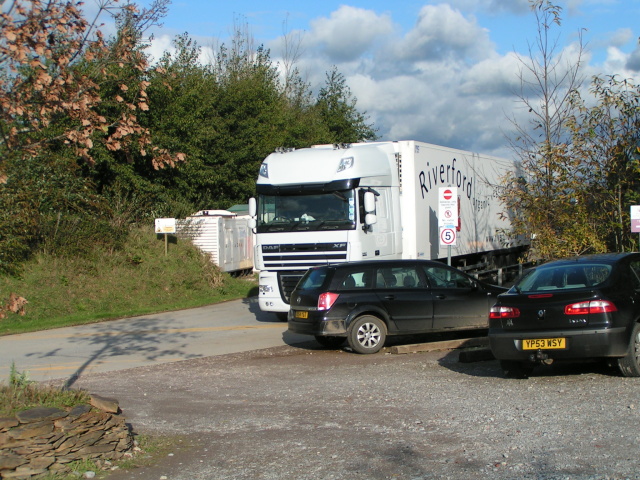
As I whizzed back down the A303 last weekend, there was a great roar behind me and I was passed by the most enormous articulated lorry, bearing the logo of Riverford Organics, a great monster in the world of organic food.

Let's leave on one side the issue of organic lorries - a peculiar concept - because the encounter reminded me of an interview I heard some years ago with Riverford's founder Guy Watson.  This is what he said:

"We'd just started building a small packhouse to Safeway's standards so we could supply them with lettuce, and their buyer wanted me to come up to see the technical department on the Thursday. I asked if Friday would be OK since I had to come up to London for the weekend anyway and the phone went dead. I rang back and said we must have been cut off. 'No sonny,' he said, 'when we whistle, you jump'."

It was an important piece of the jigsaw for me when I was writing The Human Element and trying to work out the implications for effectiveness when organisations have too much power, when they assume that kind of wasteful arrogance that goes with it.

Then, this morning, the NHS blogger Roy Lilley was writing about Monitor, the peculiar NHS regulator whose job it is to watch over the foundation trusts.

Now when I was doing my review into Barriers to Choice, Monitor was a good deal nicer to me, more helpful and more patient with me than NHS England, which was infuriated that someone like me should come along and stomp on their patch.  But it is hard to justify the existence of another hands-off regulator, paying more than 30 of its staff more than £100,000 a year.  This is what Roy said:

"A week or two ago, at a railway station, I happened upon a group of familiar faces. A Trust Chief Executive and his top team were on their way to a meeting with Monitor. Six rail fares, six top people way from their desks, six people on their way down to London to do something that at best could have been done on a conference-call, Skype or Face Time and at worse Monitor could have got off their backside and gone to the Trust. Institutional arrogance says; 'I'm the Regulator, you come to me'..."

Familiar, isn't it.  Now I'm not saying that Monitor behaves like Safeway did, but there is a parallel here.  It is the arrogance of the all-powerful facilitator confronted with the people actually doing the work.

It isn't about public or private.  Monitor is a public body and Safeway is a (sort of defunct) private body.  It is about scale and about power, the two key elements of the Liberal understanding of monopoly.

Neither of the other alternative ideologies seem to understand this.  They are either wholly uninterested in monopoly (socialists) or they turn a blind eye to it (Conservatives).   The articulation of this core issue needs to be made in every generation by Liberals, and it hasn't been recently, thought here are signs perhaps that the Lib Dems are beginning to remember their genetic heritage at last. 

These issues are the core of the business debate and the public services debate.  Public versus private, or vice versa, entirely miss the point.

Friday, 4 July 2014

The silence of the Ukip lambs

Isn't it strange how quiet it has all gone for Ukip, apart from the rather miserable business of turning their backs on everyone at the European Parliament.  They are not being talked about in quite the same way now, and largely - it seems to me - because the BBC and Guardian are less obsessed with them.

That doesn't mean they have gone away.  Given that, in the absence of the Lib Dems, they are articulating the only insurgent challenge to the political establishment, I expect they will continue to grow in support.

You will gather from this that I believe that Ukip thrives when the Lib Dems start compromising their crusade against the structures of power.  And let's face it, they are bound to do that to some extent when they are in government - but only to some extent.  Margaret Thatcher made no secret of her ambitions because she was in government, and I don't believe that doing so need always be incompatible with the limits of coalition.

But let's leave that on one side.  Liberty have taken up a case which goes to the heart of why Ukip's challenge is also compromised.

This is about Eileen Clark, British and a mother of three children, who left her American husband in 1995 with the children after a decade of abuse.

She came home to the UK, and was charged with 'custodial interference' in the USA, a charge which she believed had been dismissed.

Suddenly, nearly two decades later, she finds herself charged by the US authorities with 'international parental kidnapping' and struggling to fight off an order for extradition.

She is obviously terrified to be taken back to the USA, in the custody of US marshals, to face her abuser in court.  Clearly no American citizen would be extradited from here in the same way.  Thanks to the changes made in the extradition treaty by the Blair government, we are now completely abject when it comes to defending our own citizens.

Yet, for some reason, Ukip are silent on the issue - presumably because they don't care about the imbalance in our transatlantic relationship in the way that they care about the imbalance in our cross-Channel relationships.  Though I don't see why not.

But the Home Office has been adamant and Eileen was put on a US plane at Heathrow yesterday morning.

I find it quite extraordinary that we are colluding with an attempt to use kidnapping legislation to tackle what ought to be a civil dispute, where a vulnerable family needs some protection.

Thursday, 3 July 2014

The manipulation of children and the baying of hounds

This isn’t a blog post about the sculptor Eric Gill, but it might as well be.

Gill was one of the great sculptors of the twentieth century. His work Prospero and Ariel currently adorns the front of Broadcasting House. It is a beautiful, inspiring piece of work.

I’m sure the current rumour that the BBC is going to take it down isn’t true, but the sound of the BBC cleansing itself from the Savile affair is now pretty deafening – so who knows.  They have certainly been told to.

I told my informant that it could not possibly be so.

“But don’t you realise what he did?” he said.

The answer is I’m only too aware of what Eric Gill did. Gill fostered a number of strange political and spiritual opinions, some (but only some) of which, I must admit, I share. But his biographer Fiona MacCarthy revealed that his particular sexual obsessions were meted out, not just on his daughters, but on the family dog.

I’m not sure that this knowledge diminishes his sculpture, or undermines the power of Ariel. In fact, I don’t believe that art has to reflect the sins of the artist – though clearly it can do. Not only that, but when we start believing it does, we are on dangerous, potentially tyrannical territory. We are tackling evils symbolically.

It is an intolerant state of mind.  As if the removal of art by sex abusers would somehow remove sex abuse.  As if it was better for us not to see its symptoms than we should prevent it happening now.

Which brings me to Rolf Harris, a dangerous subject for a political blogger. And let me make clear, I’m not saying that he and Gill were really comparable.  Or that I somehow discount the seriousness of the guilty verdict.

But I remember knowing the words for just two current songs during my childhood. The first was ‘She Loves You’ (not difficult, that one). The second was ‘Two Little Boys’.

It was a strange hit for the 1960s, given that it was a revived Edwardian song, but it became infused somehow with the spirit of the time. I can’t hear it now without being catapulted back to ancient sunlight in 1969, lying in the grass, repeating the words.

Rolf was a huge part of my childhood. I revered him for a whole range of things that remain quite hard to pin down. But in the end, it was my childhood, and I refuse to think differently about it because society deems that I should.

None of this condones sex with underage girls. Quite the reverse. But I refused to let this affair – which has been such a tragedy for all concerned – taint my own memories. I refuse to let it cast a shadow over my life in that period, because I am supposed to have conventional opinions, or because I am somehow sharing in a wider sense of victimhood.

The bottom line for me is this strong stench of witch-hunt, when pictures get removed from galleries and opinion-formers struggle to prove their distance from the man. It smacks of a mass re-writing of history. It implies a kind of intolerance and group-think which I find more than a little disturbing.

Yet there is a sense in which the Rolf Harris affair is symbolic.  The truth about the 1960s and 70s is that large sections of our culture were dedicated to the sexualisation and manipulation of children, and underage girls in particular.  Whole departments of the BBC were designed to foster a sense of dissatisfied consumerism among the young.

It would be better (wouldn't it?) to look fearlessly at our combined social history in those years.  We might then learn something about ourselves - and we certainly won't learn it by taking down sculptures and flinging Rolf Harris’ art from galleries.


Wednesday, 2 July 2014

The next kind of localism will be economic

Should we be suspicious that Osborne and Adonis seem to be of one mind when it comes to devolving economic power to the cities?

There is a faint worry in the back of my mind that, when things are bad enough for both the two biggest parties to agree, then probably the world has moved on and it is too late.  That certainly seems to be Simon Jenkins' view this morning.

But don’t let’s be too hasty. There is no doubt that there is a head of steam behind the basic idea that cities should be encouraged to be creative, responsible custodians of their own economies.

This despite the fact that the mere whiff of the idea is anathema in some corners of the Treasury, where the idea of The-Bank-of-Our-Friends-in-the-North keeps them up at night. Despite the fact also that local government recruitment for a generation has tried to weed out entrepreneurial innovators (they didn’t always succeed).

Both the main engines of devolution under the coalition, the Localism Act and City Deals, have shared the same weakness – they are too often stymied in practice by Whitehall. In the same way, the Treasury stymied an ambitious plan for tax increment financing (letting cities pay for projects by keeping the tax revenues that result).

When I worked in television in the late 1980s, I tried to construct an environmental index for all the biggest UK cities. I found that the data was available for every big city in Europe except in the UK, where it was only available for London.

In other words, to take these ambitions seriously – and tackle this ingrained metropolitan snobbery – politicians need to go further than setting out their ambitions. They need to say how they will break through the restrictions of Whitehall.

They also need to say, not how this will work in Manchester or Bristol – that much is obvious – but how their plans will transform the economies of Bradford, or anywhere else where the economy appears to be passing by on the other side.

There is no point in the plans of Osborne, Heseltine and Adonis if all they do is help along the cities that can already look after themselves, and simply tie the less successful ones ever closer to the Whitehall embrace.

I’ve argued before that there is an ultra-micro economics sector emerging – new local banks, new local energy installations, new local enterprise institutions, new ways of procurement, and maybe even new kinds of money.

It is in the earliest stages, and designed to look afresh and what assets any neighbourhood has – wasted land, wasted people, wasted resources – and turning that into a sustainable economy that can provide some measure of economic independence.

Those are questions rather than solutions, though some solutions are beginning to emerge. This very local economics is potentially a basis for greater self-determination, and it needs to be at the heart of policy.

But what should political parties put in manifestos about it? The New Weather Institute has published a new report with some proposals, based on work funded by the Joseph Rowntree Reform Trust Ltd. It is called The Next Devolution and it was published yesterday.

See what you think.


Tuesday, 1 July 2014

The two different NHS systems, side by side

Remember C. P. Snow, he of the Two Cultures lecture (to read it would be to condone it, according to F. R. Leavis)?  He used to say that, to be hailed as forward-thinking in your own lifetime, the trick was to be only a couple of seconds - and certainly no more than a minute or so - ahead of anyone else.  Any more than that, and you look like a crank.

For people like me, trying to generate ideas and make a living out of it, this is a fearsome problem.  I am constantly either too far behind or too far ahead of the curve.

I spent six months, ending this year, sitting on the Lib Dem public services commission, which will report in time for the party conference.  I think parts of the report are pretty good but I worry we weren't quite far enough ahead, especially in our injunction for service integration.

I was thinking this reading the influential NHS blogger Roy Lilley yesterday, who was being generally flabbergasted that Health Secretary Jeremy Hunt was backing US-style Ascountable Care Organisations - and was clearly right behind the vertical integration of services.

In fact, one of the oddities about the NHS at the moment is that it appears to be going in two directions at once.  On the one hand (if you read the campaign blogs and the political press) then it is being sold off, disjointed and disco-ordinated (is there such a word?).  On the other hand (if you are in the Department of Health) it is being integrated.  On the one hand competition, on the other hand integration.

It is true that you can have both, but there is an accommodation to be sought and I'm not sure where that compromise is going to be - probably different in different places.  What is definitely true is that the NHS is turning out different to what Andrew Lansley designed in the early years of the coalition - and it is peculiar that this is barely rceognised in the political media.

I hope that the alternative providers will not confuse the integration (they needn't).  I hope the integration won't streamline so much that it will get in the way of individual difference, yet will allow the system to focus on the places and the people which where costs are mounting the most.

I'm not one of those who believe that the NHS would be best served by going back to what it was in the 1970s.  It needs other kinds of service, community support and a range of other things too, some of which can only be provided by other patients (see what I've written on co-production in my book The Human Element).

And here is the point.  There is no point in vertically integrating the NHS if you don't also integrate the service sectors it also needs - from social care to alcohol services, not to mention education and the police.

NHS integration really just begs the question.  How can we knit all the services that people need together in such a way that we don't have to deal with every one of them individually, with different protocols and systems?

And please don't tell me this is an information problem as if it can be solved by an app.  Nor is it an outcomes problem, as Roy Lilley implied in his praise of SMART commissioning - the trouble with commissioning for specified numerical outcomes is that it misses all the stuff between the definitions, narrows the outcomes and undermines the coherence of the service.

No, in the end, integration has to be very local.  It has to be human-scale and de-professionalised.  It needs to deal with people's complex lives as they are, not as the service designers would prefer them.  And we are still some way from that and, generally, hurtling in the opposite direction.  And that direction is ulimately extremely expensive.