Thursday, 6 March 2014

When you measure social issues, they get worse

For reasons some people know locally, I'm only too aware of just how much domestic violence there is, in the UK and beyond.  It is insidious, destructive and much more common than most people think.

But yesterday's mega-survey of the EU, which found that the UK had some of the worst levels of domestic violence (the 5th worst, in fact), has set me thinking about the peculiar effects of counting, and what happens when you take statistics too seriously.

I'm aware that these are not official figures.  They are based on a survey, but the same peculiar effect applies, and I wrote about it in my book The Tyranny of Numbers.

In quantum physics, the mere presence of the observer in sub-atomic particle experiments can change the results. In anthropology, researchers have to report on their own cultural reactions as a way of offsetting the same effect.  Perhaps that is some clue to the peculiar way in which statistics tend to get worse when society is worried about something.

Why, for example, did the illegitimacy figures shoot up only after the war babies panic in 1915? At the time of the panic, the number of illegitimate births was actually astonishingly low – and the number of marriages strangely high. After the panic, the illegitimacy rate suddenly increased.

Why was the number of homes unfit for human habitation in the UK in 1967 (after TV film Cathy Come Home) were almost twice the figures for 1956 – despite over a decade of intensive demolition and rebuilding?

The garrotting scare in the 1860s was the same. The story began during the silly season in August 1862, and public horror got so bad that Punch was advertising a range of fearsome neck-guards with metal spikes to protect your neck. But the increase in the crime statistics came immediately afterwards, once the Garotters Act had brought back flogging for adults.

The tragic death of Stephen Lawrence in a racist attack led to widespread concern about race attacks in London. But after the public inquiry on the subject in 1998, Metropolitan Police figures of race attacks leapt from 1,149 to 7,790 in one year.

It was the same with the sex abuse statistics. They toddled along in the UK at the 1,500-a-year mark until 1984, when an unprecedented wave of publicity on both sides of the Atlantic catapulted the issue to the top of the public agenda. 

Between 1984 and 1985, the NSPCC reported a 90 per cent increase in reported cases, and in the following year they reported a similar rise. 

Child abuse campaigners would say that the actual rate of child abuse is never reflected properly in the statistics. They may well be right – the same would be true of the figures for racist attacks. All I'm saying is that the actual statistics wouldn’t have told you anything, except how strongly the public felt about it at the time. 

So often, the statistics start rising after the panic, rather than the other way round, as an eagle-eyed society tries to stamp out the unforgivable. That’s the Quantum Effect of statistics.

It’s difficult to know quite why the figures go up. Sometimes the definitions change to reflect greater public concern. Sometimes people just report more instances of it because it is in the forefront of their minds. Sometimes, maybe, what we fear the most comes to pass.

You may be seeing something of the same Quantum Effect in the story about domestic violence.  The figures are high, both official figures and survey results, when people notice domestic violence.  It is high when they define incidents as domestic violence.

On the other hand, the figures are low when society is blind to domestic violence, when they turn a blind eye to it, when they define it as just one of those things.  The statistics may tell the absolute reverse of the truth.

This may be an explanation for why the domestic violence figures seem worse in the liberal Scandinavian countries, where people are very aware of domestic violence and worried about it.

None of this suggests that domestic violence isn't an appalling cancer.  But it does suggest that the figures won't give you a very good guide to it - because they tend to get worse the more worried we are about the issues.

It is a strange phenomenon, and it gets stranger the more we trust the data: the truth is that - the more worried we are about something - the worse the figures get.

Subscribe to this blog on email; send me a message with the word subscribe to dcboyle@gmail.com. When you want to stop, you can email me the word unsubscribe.


Wednesday, 5 March 2014

A whole new kind of brevity in publishing

Alan Turing: Unlocking the Enigma (Kindle Single)Years ago, I went to a palm-reader in Kathmandu - my only visit to anyone remotely like that.  I'm too coy to say here what he told me, except that one of the main elements of my personality was what he called 'brevity'.

This may not be obvious to anyone who has endured one of my lectures.  But it is true that I value brevity as a skill, as one of the only ways of conveying ideas in a sufficiently riveting way.

I was reminded of this today by a very thoughtful review of my ebook Alan Turing: Unlocking the Enigma by Nick Sidwell of Guardian Shorts, which talks about the advantages and disadvantages of writing complex biographies in less than 20,000 words.  There are, after all, longer biographies of Turing you can get your teeth into. This is what Sidwell says:

"If you don’t have time to read one of those longer books: read “Unlocking the Enigma.” If you want to remind yourself of who Turing was before tackling a longer work: read “Unlocking the Enigma.” If you simply want to discover who this often misunderstood man was: read “Unlocking the Enigma.” You will not regret a minute spent in its company. It’s just that if you truly want to learn about Alan Turing, just don’t expect it to be the only book you read on him."

This is a generous way of putting it.  But the truth is the ebook market has turned out more different from mainstream books than I ever expected.  

They tend to be around 20,000 words and to retail for £1.99 or £2.99, and to give the authors much more generous royalties.  It is in this market, which is growing dramatically, that the action is - not the rather expensive end of ebook publishing, dominated by the much pricier electronic versions of real books, published by the old publishers.

In fact, I have ended up - for the first time in my career - in a Top Ten bestseller chart.  This was the Thin Reads top ten of Kindle Singles.  OK, my Alan Turing book seems to have slipped out again this week, but the damage is done - I am now addicted to the Thin Reads Top Ten and can't stop looking at it.

It occurs to me that the two genres, thin reads and fat reads, may actually go off in different directions - the fat reads beautifully published and designed, the thin reads very basic but expertly brief, enough for a few days commuting and for busy people who want some background reading in more depth than they can ever get in a magazine.

In the meantime, if you wanted to test out Alan Turing: Unlocking the Enigma, you can download it onto a computer if you don't have a Kindle - and it only costs £1.99.

All I can do is repeat the review. I have, says Sidwell, attempted "to squeeze an elephant into a dog kennel. On the face of it, it shouldn't fit. Yet, for the most part, he is highly successful".

In fact, the process of squeezing elephants into dog kennels is highly instructive.  It isn't really about summarising; it is about finding the underlying narrative and trying to tell it in a compelling way.

Subscribe to this blog on email; send me a message with the word subscribe to dcboyle@gmail.com. When you want to stop, you can email me the word unsubscribe.

Tuesday, 4 March 2014

Why did PIE confuse people?

There is a difference between liberals and socialists.  Tell me something I don't know.

OK, give me a chance.  The thing is that I've found myself falling back on a peculiar definition of my own that sometimes helps me realise why people are disagreeing.

It is based on their blind spots.  Socialists seem to me to have a blind spot about the abuse of power, hence the inevitable way that Labour governments eventually start restricting civil liberties - and how they fall back on centralised control in any given situation.

It isn't that they are convinced tyrants, or anything like that: they just don't see the problem.

Liberals are alive to the abuse of power at the core of their being, but they tend to be blind to the abuse of money.  Hence their failure to come up with much in the way of distinctive economic ideas since Keynes breathed his last in 1946.

Again, it isn't that they are somehow bankers themselves, they're just not very interested in economics.  They don't see it.

This is a rather roundabout way of writing about the strange story about the Paedophile Information Exchange in the late 1970s, and the involvement of the National Council for Civil Liberties (NCCL).

It is strange to grasp this, because of my youthful appearance, but I can remember the late 1970s rather well.  Flared trousers.  Three TV channels.  Grunwick.  Ah yes, it all comes flooding back.

I was a student at the time and into the more libertarian and anarchic causes, like joining the Liberal Party.  They were the only MPs to vote against the nuclear reprocessing plant at Windscale, as we called it then - of course I had to join.

I remember the debate about PIE in student circles.  I remember thinking it seemed very odd at the time, but don't remember much more about it.  The truth is that I find it quite hard to fling myself back into the attitudes of the time.

I'm only writing about this now because Jonathan Calder was brave enough to do so, remembering the different atmosphere on the political left at the time - the psychological attempts to abolish "the very concept of childhood".

But my rule of thumb for distinguishing liberals from socialists is relevant here.

We are a far more liberal society, in many ways - I'll come back to this - now compared to 1979.  As liberals, we have the advantages and disadvantages of that shift in attitudes.  We are more alive to the abuse of power, and more blind to the abuse of money all around us.

We see child abuse now for what it is - the abuse of power.  We have done so pretty much since the explosion of interest in the issue since 1984, or thereabouts.

But I have been wondering if this was relevant to the mistake that NCCL made at the time.  The people in charge in the late 1970s, and now in the gunsights of the Daily Mail, were socialists and socialists have their own blind spots.  The NCCL trio were clearly alive to the abuse of power or they wouldn't have been working for NCCL in the first place, but even so - I wonder...

It is kind of de rigeur at this point for columnists to add in a defensive condemnation of PIE, explaining - as if we needed to know - that they were wrong.  And of course they were wrong, but it is interesting why they confused people at the time.

As Sam Leith pointed out in the Evening Standard yesterday, this isn't really about Messrs Harman, Dromey and Hewitt.  It is about why society as a whole tolerated PIE back then.

So our collective shift from the naivety of socialists (blind to how power can be abused) to the naivety of liberals (blind to how money can be abused) is relevant here.

Jonathan is quite right to imply that this isn't the whole story.  There is another side to this, and although we are a more liberal society than we were in 1979, I'm not sure we are a more tolerant one in every respect.

It isn't just the way in which a child abuse industry has emerged, terrifying parents who are not confident enough to resist, or the bureaucratic processes that get in the way of actually protecting children.  It is the wider attitudes in society that manages to condemn adultery ever more fervently, that increasingly purses their lips at the way other people bring up their children...

I could go on.  We all know society's new hypocrisies and train our mouths accordingly.


Monday, 3 March 2014

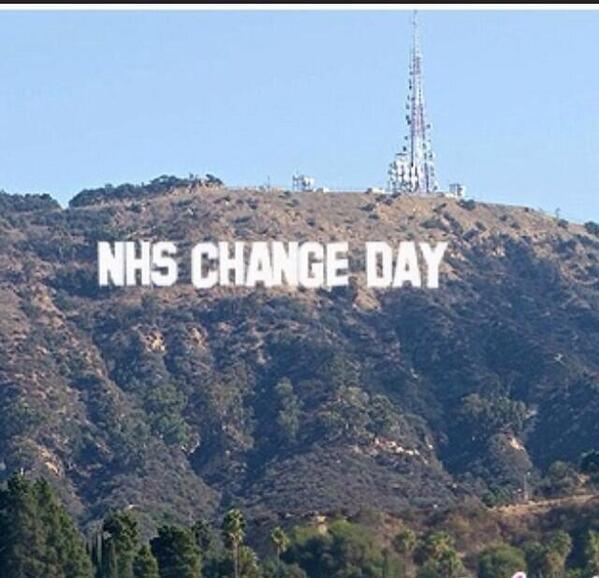
Why NHS Change Day might save money too

It is more than two decades since Al Gore’s National Performance Review during the Clinton years.  It emerged after the scandal of wasteful Pentagon spending, because the cost of simple items ballooned when they went through armed forces bureaucracy - a serious lesson about centralised procurement.

The $7,622 coffee percolator bought by the air force was the most spectacular, but the one that really caught the public imagination was the $436 hammer bought for the navy, or – as the Pentagon called it – a ‘uni-directional impact generator’.

One of the first schemes the Review launched was an annual Hammer Award for public sector employees who had made huge efforts to work more effectively.

That was the point. The Review set out a series of principles for saving money by scrapping rules and bureaucracy and giving power back to staff. Then they urged them to get on with it and told stories about their progress.

Regular newsletters were packed with suggestions. Abandon sign-in sheets and clocking-in machines. Buy equipment locally if you think you can get a good price. Waive the need for travel expense receipts for sums under $75.

One of their key stories was about the Occupational Safety and Health Administration (OSHA) office in Maine, the equivalent of the UK’s Health and Safety Executive. It consistently came top of the league for how much they were doing, for the most citations and fines, yet the workplace safety in the state was still the worst anywhere.

When they realised this, the Maine office created a small revolution. They tackled the most difficult factories first, and created employee teams there to solve the problems. If the companies agreed to support them, they would suspend their inspections and punishments.

The result was that the accident injury rate went down by two thirds. It wouldn’t have been possible without inspiring staff to seek out new ways of doing things – and without a big idea that pointed them in the right direction.  More on the NPR in my book The Human Element.

Reform of public services in the UK has gone mainly in the opposite direction.  It has involved less responsibility for frontline staff, less flexibility, less local imagination.  We have had nothing like Gore's NPR, except perhaps NHS Change Day, which is - fanfare - today!

It is a brilliant example of how you can humanise a service by starting with the human energy below.  The influential NHS blogger Roy Lilley has written a hymn of praise.  I agree with him that this kind of thing won't change the realities of budgets, but absolutely agree that:

"It's a mechanism and a route whereby the frontline staff all over the country get THEIR chance and THEIR voice to give THEIR idea for how to make a difference and for that chance and voice to be equally heard, equally respected and given space to be implemented by their managers and leaders..."

Quite right.  But I'm not sure it is irrelevant to budgets either.  It is the inflexibilities in the system that ultimately waste money, and days like this which can begin to iron them out with the power and energy of people on the frontline.

Subscribe to this blog on email; send me a message with the word subscribe to dcboyle@gmail.com. When you want to stop, you can email me the word unsubscribe.

Friday, 28 February 2014

The terrifying new metaphysics of data


I watched the film Lincoln recently, only a year after everybody else.  Apart from wondering why we can't make such intelligent films about political history in the UK, I was fascinated by the portrayal of Lincoln himself - his endless supply of homely tales which infuriated his colleagues but played such a role in defusing tension.

By coincidence, I've just been reading the absolutely compelling autobiography of Peter Drucker, Adventures of a Bystander.  Drucker really invented the art of management writing, and died recently (well, in 2005) just short of his 96th birthday - carrying on writing and consulting almost until the last moment.

Drucker describes Charlie Kellstadt, retired chairman of the retailers Sears Roebuck, enraging his fellow committee members in a Defense Department advisory group, doing exactly the same - long tales about selling bras which took apart the arguments of the young guns, absolutely but without rancour.

But Drucker drew some conclusions about this, writing in 1978, that have absolutely taken a grip on my mind today - because they are directly concerned with a major theme of this blog.  Namely, the gap between figures and reality.

Robert Macnamara, Kennedy's cerebral Defense Secretary - and a forerunner of government targets - went ahead with this particular plan anyway, ignoring Kellstadt, because the figures were right.  But the figures didn't express the wisdom that Kellstadt had gained selling bras.  The result was the disastrous decision on the Lockheed Jumbo air transport contract.

It is three and a half decades since Drucker was writing, and five decades since Kellstadt was irritating Macnamara's committee.  That gap between figures and reality is much more tenuous now.  Whole swathes of those who run the world no longer believe there is a gap - vast institutions are run without regard to any gap at all.

You might well say that this was why our organisations, public and private, are generally speaking so ineffective.  I couldn't possibly comment.

But Drucker put his finger on the issue, which is as much theological as it is economic.  He described the shift in the world since he was working at a London merchant bank in the 1930s called Freeberg & Co - then there just a few people, maybe in banking, who saw the word like that:

"Our whole society has moved to the perception and metaphysics Freedberg & Co represented.  It has shifted to seeing symbols as real: money, 'trades' and 'deals', interest rates and Gross National Product.  Our whole society assumes, in the words of the medieval logician, that Nomina sunt realia: that the symbols have substance while the objects they represent are mere shadows."

Drucker describes this metaphysical approach to life as 'ultra-nominalism', a version of the medieval philosophy, that "treats symbols and images as the ultimate reality, and people and things as shadows".

And of course, he is absolutely right.  That ultra-nominalism has grown in strength, increasingly blind to the shadow world that we used to know as human reality.  There is even a debate about whether this human reality is different at all from the figures that purport to describe it.

It explains the slow hollowing out of our institutions, and maybe also our bizarre failure to act on the world.  But for anyone who still believes there is a gap between data and reality, can I recommend my own book on the subject, The Tyranny of Numbers.  

It is more than a decade old but there is life in the old dog yet.  And over that period the new metaphysics has growth rapidly in strength.  It may now be changing reality by ruling it non-existent.

Those of us who know otherwise may have to fight to keep the old language alive, which is the only way we will be able to assert a separate existence for awkward reality beyond the data.


Subscribe to this blog on email; send me a message with the word subscribe to dcboyle@gmail.com. When you want to stop, you can email me the word unsubscribe.
Thursday, 27 February 2014

Why the home ownership dream ended

Here is a picture of the flat where I was born.  Randolph Avenue in Maida Vale, a former red light district fallen on good times.

It was a slum in 1958 when I first emerged there, in a rented ground floor flat. Now the same flat is occupied by the head of Benetton Europe (not actually this front door, in case you are casing the joint).  I can’t even afford to sleep rough there. There’s the problem.

Now, there are some predictions I make where I don't really want, for my children's sake, to be proved right. But unfortunately what I said in my book Broke: How to Survive the Middle Class Crisis is all too true.

As it said in the Daily Telegraph this morning, home ownership in the UK is at a 25-year-low - not back to the levels before Margaret Thatcher came to power, determined to shape a property-owning democracy, but almost.

Home ownership is down to 65 per cent, its lowest level since the 1987 stock market crash, when Nigel Lawson was Chancellor.  No coincidence this, as I will explain.

Also a third of all homeowners are now over 65.  The young are being priced out, and flung into the not very tender embrace of the private landlords.

Does this matter?  Well, I think it does.  It means a loss of independence, a dependence on the whims of landlords, and continuing rental costs carrying on for the rest of your life.  

There is a peculiar resistance to home ownership on the left, is if renting was somehow ideologically purer.  I don't see it - and there certainly is no insulation from the rocketing costs that way.

The 30-year housing bubble has also led to huge additional costs for taxpayers, as the Telegraph report explains:

"The figures also disclose that there has been a significant increase in the number of people who rent their homes claiming housing benefit.  Over the past five years, the proportion of people claiming benefits who rent privately has risen from 19 per cent to 25 per cent, while in the social housing sector the figure has risen from 59 per cent to 66 per cent."


But I take issue with some of the coverage of the bubble.  It is always written as if this was some kind of betrayal of the objectives of the Thatcher government.

It isn't.  It is a direct result of the poor decisions they made then.  Three in particular:

1.  Debt.  The idea that rising home ownership could be built sustainably on unrestrained debt, an idea that is popularly supposed to have been embraced by Margaret Thatcher after persuasion by Nigel Lawson, was always wrong.  If there is no limit to the money available for mortgages, then it will always tend towards inflation - and the shrinking homes and the lengthening mortgages are an inevitable result.  We have seen 40-year terms and are well on schedule to end up with the enslaving Japanese-style grandparent mortgages, paid off by the generation after next.

2.  The Corset.  The Corset was an instrument in the 1970s and before which regulated the amount of money going into the mortgage market, keeping house prices as level as possible while still allowing housebuilders to make a profit.  It was abolished by Sir Geoffrey Howe in 1980, as a direct result of the end of exchange controls - but nothing was put in to replace it.  As far as I know, nothing was even considered.

3.  Big Bang.  Yes, the City needed reform, but the free-for-all ushered in by the flawed reforms presided over again partly by Lawson, with help from Cecil Parkinson, inevitably unbalanced the economy.  The avalanche of money going through the City inevitably got recycled into bankers bonuses - which in turn got recycled into rising house prices.

No, I don't include the failure to build homes as one of the main causes - though clearly it hasn't helped.  When more than 60 per cent of new homes in London have been snapped up by foreign investors, then you have to look elsewhere for the cause - which is, as I say, the unconstrained growth of the mortgage market.

It was based on a peculiar, fundamentalist view of market economics.  In the context of the 1970s, it looked creative.  But from the benefit of three decades later, you can see that - however much you believe in free and open markets (as I do) - the fundamentalist idea that markets produced real prices when they are left to themselves is as damaging as religious fundamentalism in its own way.

And just as destructive.  Unless we do something about it, it will destroy the dreams of the next generation, constrain them in jobs they hate because it is all that will satisfy the demands of Mega Landlord PLC.

More about how we got into this mess, a series of blow by blow accounts, in Broke.

Subscribe to this blog on email; send me a message with the word subscribe to dcboyle@gmail.com. When you want to stop, you can email me the word unsubscribe.

Wednesday, 26 February 2014

Where is 38 Degrees now there's work to be done?

I got so cross with the internet campaigners 38 Degrees over the Lobbying Bill, for their half-truths and infuriating ability to concentrate useful political energy on a chimera.

But they were right that the Lobbying Bill was much less than perfect, and particularly in its failure to tackle the funding of political parties.

In fact, it is hard to see how restricting money that goes into electoral campaigning will make any difference when there is the loophole, shouting at the top of its voice.  Any passing billionaire who wants to impose his views on UK elections only has to fund a political party - either his own or someone else's.

This is usually the cue for anyone involved in politics to shake their heads in despair.  Only the Lib Dems, chronically under-funded, have any obvious benefits from restricting donations to political parties.  The others just need the money and tend to keep their heads down.

So, it's hopeless, right?

Well, no, it isn't.  Just for a moment, we have a political opportunity to act.  Labour have thrown all the cards up in the air by changing their relationship with their trade union funders, and in a creative way that has huge possibilities for energising their support base.

It also just so happens that the Conservatives are horrified by the way huge donations are now bypassing them altogether and going to UKIP.

There is an openness in Westminster to tackling the basic problem, the Old Corruption as William Cobbett put it, on a cross-party basis.

Can it be done in the year before the next general election?  What we really need is an enlightened internet campaigning organisation to take up the cause, when they could make a major difference?  They have the support base, invigorated by the Lobbying Bill campaign, who just need pointing in a more creative direction.

Where is 38 Degrees when you actually need them?  Don't tell me they are still out chasing chimeras?

Subscribe to this blog on email; send me a message with the word subscribe to dcboyle@gmail.com. When you want to stop, you can email me the word unsubscribe.