Monday, 27 April 2015

40p a minute - why isn't it an election issue?

I had to phone the HMRC’s tax credits helpline last week. I had to report that my household income had risen this month. I’m obliged to do so for fear of the most appalling consequences if I don’t. I can’t apparently do so online, at least until my annual information pack arrives in July.

The experience was so infuriating and has made me think rather differently about the election campaign.

The helpline is not a freephone, it's an 0345 number. I had to hang on twice – first for an hour and a quarter, after which someone rang my front door bell and I had to ring off. Then I tried again and eventually got through the switchboard after 45 minutes. That is about 120 minutes at 9p a minute which comes to just over £10 I paid for the privilege of hanging on listening to their music tape.

I can afford £10, though it is infuriating that I should have to pay for their official incompetence. If I had been too poor for a landline and had to hang on via a mobile at the rate of up to 40p a minute, that is nearly £50 I would have been expected to pay via my phone bill.  Just to do what the law insists or to ask advice about it.

That kind of incompetence, enforced with all the weight of the law, is absolutely scandalous. Yet it apparently has no place in this or any other election campaign. 

So I sympathise with Aditya Chakraborrty and agree with him about the issues that are not being hammered out in this election. It is hard to list any that have, at least in any way that spreads light rather than confusion.

Labour says nothing (though the announcements about housing today were at least a shot in vaguely the right direction, though it wouldn't have the right effect.  And the Conservatives say nothing, and stay silent about how they are going to pay for it.  When they do say anything, the others say something fatuous about their "sums not adding up" (who was that today, I wonder?).

I agree with Nick Tyrone also that the lack of debate, lack of ideas has also been staggering. Dull in the extreme as the Westminster village gets excited about the prime minister’s football allegiances. But the issues, in what is supposed to be the most important election for a generation, go undiscussed.

The traditional answer is that the election campaign must focus on ‘bread-and-butter’ issues. This usually means long screeds of meaningless statistics about childcare, wages or the cost of living.

What is doesn’t apparently encompass is the sheer incompetence and arrogant authoritarianism of the central government services the poor have to deal with, at great expense and inconvenience in time and money.

Of course it isn’t just the poor who are at the sharp end of this bread-and-butter issue. As a company director, I’ve been warned by Companies House that I must offer my one employee (me) a pension by 31 March or face a stiff fine. I’ve been warned to expect log-in details. But can they be bothered to send the log-in details by their own deadline? No, they can’t – and presumably the stiff fines they were preparing for me don’t apply to them.

This isn’t a complaint about privatised services – they are just as bad, just as arrogant, bullying and incompetent. This isn’t about public versus private, and is therefore not recognisable as a relevant election issue. Yet it affects everyone, every day.

Election issues need to be expressed in an approved way, with enough technocratic jargon to make them sufficiently obscure. They need to be about issues where there is some obvious division between the parties.

This doesn’t. Nor do all the other incompetences and inhumanity we have to deal with in the labyrinthine services, state and corporate, that we face every day. Yet personally, in my current mood, I would imprison whoever is responsible.

Subscribe to this blog on email; send me a message with the word blogsubscribe to dcboyle@gmail.com. When you want to stop, you can email me the word unsubscribe.

Thursday, 23 April 2015

Rupert Brooke, the antidote to Big Englandism, died a century ago today


Today is April 23, a date of some significance.  It is St George's Day.  It is Shakespeare's birthday and deathday.  It is a number of other people's birthdays too (many happy returns, Andrew!).  It is also the day that Rupert Brooke died, exactly a century ago, in 1915.

We could argue about his significance now, and I have done in my short ebook about his death, Rupert Brooke: England's last Patriot.  There will certainly be people who dismiss him as twee, mixed up or naive, or all three. But he was, in a small way, a pioneer.

He articulated a twentieth century Englishness, calm, green, nostalgic and unthreatening (even his famous war poem The Soldier was about death in war not military glory).

His hymn to The Old Vicarage, Grantchester came from this nostalgic, gentle tradition - it is about the quiet which might potentially smooth his nervous breakdown.  It is about a little place, not a big place.

He paved the way, it seems to me, for the mid-century revival of pastoral Englishness, which you can see in the work of Eric Ravilious, now on show at the Dulwich Picture Gallery.  Like Ravilious and Piper and others in the new romantic tradition, Brooke's poems have a kind of glowing transcendence about them (perhaps ntot he one about being sick on a Channel ferry, but Grantchester and others).

It is a gentle, unassuming, patriotism in the tradition of Jerusalem (see my short book on the history of the song), and it is worth remembering now that there is a more strident, intolerant nationalism abroad at the election hustings.

Subscribe to this blog on email; send me a message with the word blogsubscribe to dcboyle@gmail.com. When you want to stop, you can email me the word unsubscribe.

Wednesday, 22 April 2015

It was actually John Major's fault (partly)

I was press officer for Democracy Day in 1992, seven days before polling day in the general election.  It was a highly successful stunt organised all over the country by Charter 88.  It nearly killed me at the time.  The conventional media was pretty insulated against anyone 'intervening' in the election campaign from outside Westminster, and publicity was a frustrating business.

It was as if it wasn't really our business.

I seem to remember that Democracy Day achieved two things.  First, it successfully put the constitution on the political map - PR for elections, devolution to Scotland and Wales and so on.  Not at the time, but for later.

Second, a Conservative official had overheard Roy Hattersley talking about Labour's campaign plans over lunch at the Atrium restaurant - the plotter's eating house of choice in those days - and because of that, they knew Labour was planning to respond positively.  They were also ready for them.  A deluge of criticism engulfed us all the next morning.

It particularly energised John Major on his soapbox.  "The United Kingdom is in danger," he said.  "Wake up, my fellow countrymen!"

I was reminded of that today with Major's mildly hysterical intervention in this campaign, nearly a quarter of a century later.  But the Major sentence which really grabbed my attention yesterday was this one:

"This is a recipe for mayhem. At the very moment our country needs a strong and stable government, we risk a weak and unstable one..."

It is worth thinking back 23 years to remember why we are risking this 'weak and unstable government'.  It is because no action was taken then or later to make the voting system more representative.

The usual failure of the voting system to reflect Lib Dem support goes almost without much mention these days.  It looks as though Ukip or Green support may be almost as big (I think the Lib Dems will overtake Ukip in the popular vote) but may end up with one MP each.  You may not like their message, but virtually excluding them from Parliament will only bring the whole caboodle even further into disrepute.

But the real problem is looming in Scotland.  Because Major, Blair, Brown and - let's face it, Cameron too - failed to act, there is a serious prospect that the SNP will take most of the seats in Scotland with around half the vote.

I don't buy the argument that this is an unprecedented disaster in itself - the Victorian Liberal governments were supported by the votes of the Irish Nationalists - but if it doesn't reflect the democratic vote, then of course it will be unstable, possibly violently so.

I don't want to blame Major personally for this failure, though he has to take a share of the blame.  But it is part of a wider, more complex problem.

It is this.  Because the two old parties of government are insulated by the system, they tend to exemplify the two great British political skills - doing nothing about a clear and present danger to life in the UK for decade after decade, then riding roughshod over everyone by cobbling together a last-minute sticking plaster solution.  

So if you want to know why we are in danger of the 'weak and unstable government' that John Major describes, it is worth remembering that it was eminently preventable.

Subscribe to this blog on email; send me a message with the word blogsubscribe to dcboyle@gmail.com. When you want to stop, you can email me the word unsubscribe.

Tuesday, 21 April 2015

The rise of nationalism is Labour's fault

The burst of excitement about politics in Scotland is really unprecedented.  It requires a little explanation, and why people who have been turned off from politics appear to be turning - to some extent at least - to nationalists.  Nationalists, with all their intolerance too, which is all too obvious as they shout down opposing candidates in the streets.

Why?  It seems to me that there are two reasons.

First, the idea of imagining your own nation has an empowering effect, whether it is practical or not.  It allows people to imagine solutions to intractable problems which appear to have been ruled out by an exhausted elite at Westminster.

In Westminster, nothing appears to be possible.  Issues tend to be framed in terms of gestures within existing institutions, or in terms of budgets, which might have little or nothing to do with the basic problem.  The independence debate appears to have allowed politicians to sidestep their besetting sin: the worship of existing institutions, and a blindness to their manifest failures.

It is bound to be energising when you find yourself in a political culture that is prepared - rightly or wrongly - to think boldly.  It is worth remembering this in the future if, as seems increasingly fraught, we are ever going to persuade Scotland to stay in the union.

Second, it  seems pretty clear that the swing to the SNP is primarily an anti-Labour swing.  It means that people have suddenly grown up, have looked around themselves and feel a sense of rage that they have been trapped, abused and taken for granted all these years by the old style arrogance of the Labour Party.

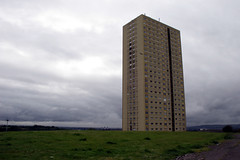
In this respect, again, the swing to the SNP must appear like a liberation.  And look at the housing around Glasgow and you realise the appallingly inhuman mess that Labour rule has made of Scotland since the Second World War.

When I saw some of the estates in Glasgow for the first time, they took my breath away.  In fact you could see that Labour-style mass houisng, inhuman and technocratic and degrading, as a vision of everything that has gone wrong with politics in the UK over the same period.

Subscribe to this blog on email; send me a message with the word blogsubscribe to dcboyle@gmail.com. When you want to stop, you can email me the word unsubscribe.

Monday, 20 April 2015

The three biggest distortions of the general election

Spare a thought for a moment for the hapless policy wonk. I don’t really speak as a represetative of the guild, so to speak – I am far too opinionated. But I have enough policy wonk in my genes to know what they are going through, and two weeks from a general election is an absolute nadir.

The general election campaign has reached its height. Those interested in policy have waited for this moment for five long years when, at last, the issues would be aired and hammered out effectively, and decisions would be reached, contradictions revealed and we could all move on.

But of course, when it comes to the point, nothing remotely like this happens. The issues are simplified to the point of stupidity, the real problems are obscured, the parties slag each other off on the basis of mindless distortions and the world appears to go backwards.

It is a caricature of democracy. The very opposite of what our forefathers fought for, and it happens every time. Perhaps this time more than last, time because the stakes are so high.

The depths of the obscurity always take me by surprise at elections, but – like the pain of childbirth – something about the wonk genes means we are bred to forget it. This time, I reckon its worse then ever but I know I said that to myself last time.

So just as a very small and, I’m aware, a rather ineffective gesture, here are the three most outrageous distortions and evasions of the real issues that are supposed to be elucidated. Read them and weep.

Distortion #1. It isn’t about privatisation, it’s about contract culture.
Privatisation, certainly in the NHS, seems to me to be pretty much on the turn. Contracts arc being abandoned early by many of the biggest contractors, and for the same reason: there really isn’t the opportunity for profit there any more. But the culture of contracts carries on spreading. It narrows down the deliverables, pushes costs elsewhere in the system and renders services less effective – because they have shifted the emphasis from doing a good job onto achieving target numbers, which is in practice something very different.

The problem isn’t really about who is running the NHS, which matters not nearly as much. It has everything to do with the style under which they are run. Because the real problem is the extension of fatuous call centre-style management into public services, which gives the illusion of saving money but actually sprays costs elsewhere.

The real issue isn’t who runs the service, it is how it is run. It really matters that it is run so that everyone counts, and not with the alienating and ultimately expensive techniques of mass production, which only seems to meet people’s needs. Why are these issues not being articulated?

Distortion #2. It isn’t the housing supply, it’s the money supply.
Listening to the housing debate, you might be forgiven for thinking that it is the shortage of homes that has driven up the costs – it is, in a small way. But what is really happening is that house price inflation over 30 years been driven primarily by the oversupply of property finance – first by changing the goalposts about how you could borrow, manipulated during the Blair years, then via bankers bonuses and now via foreign investors.

We might conceivably be able to meet our own needs by building more homes, but we can’t possibly satisfy the demands of the property investors in the Far East without prices rising.

See more in my book Broke: How to Survive the Middle Class Crisis.

Meanwhile, I have just listened to a Conservative housing speaker talking about ‘affordable’ housing in London, apparently unaware that this still requires a salary of well over £50,000 for a small flat. Has the BBC punctured that particular lie?

Distortion #3. It isn’t the privatisation of the big banks, it is the absence of small banks.
If ever the was a monumental failure to grasp the real issue for the economy, it was David Cameron’s announcement about the sale of shares in state-owned Lloyds. It will be sold and then carry on just as before, but with the extra constraints to make it safer – but also less effective – that were enacted by the coalition. 

Yet we still won’t have what nearly every other country in Europe has: an effective tier of small banks which are committed to their community, have local knowledge and can lend effectively to small business.

Some of the manifestos acknowledge this (certainly the Lib Dems do), but where is the debate that links this to the need for a more entrepreneurial economy? Where is the challenge to Labour and Conservative for the effective dislike of small business, which underpins everything else? Where is the debate about how to achieve this new tier – given that SME lending is still falling in the UK?


**

So there you have it. Three boulderised issues, stupidised by the lack of genuine election debate, an empty debate that is underpinned by the collusion of the BBC and their obsession with political process (except a handful of mavericks who are invited on to talk about issues that are missed out).

You will note also that these are mainly about the failures of big institutions and the urgent need for smaller, more responsive ones. That is the key change we need – but do you hear it debated?

The institutions don’t get debated partly because mainstream parties become cheerleaders for existing institutions. Perhaps that is where we need to look when the dust has settled a bit.

This blog is cross-posted to www.newweather.org

Subscribe to this blog on email; send me a message with the word blogsubscribe to dcboyle@gmail.com. When you want to stop, you can email me the word unsubscribe.
Thursday, 16 April 2015

Have the Tories have abandoned the middle classes?

I wrote earlier this week about selling social housing to tenants, and the circumstances where it could be a radical idea again, as perhaps it was in 1980 - backed at the time, rather bravely, by the Liberal Party's housing spokesman, David Alton.

Of course, what we didn't know then was that local authorities would be forced to hold onto the money they made from the sales, rather than investing them in new stock.  That small mistake made an excitingly radical idea into the foundation of our current housing shortage.

What I wrote seems to have been read more widely than my posts usually are, and especially for some reason in the USA - it was copied in Florida (thank you, Maria!) and I've found myself on the receiving end of fascinating responses from there.

I've also had a number of online conversations with people who don't agree with me that the independence of owning a home is in any way superior, or that it should be extended to the poor as well as the rich.

I realise it is politically correct to say that renting is morally preferable, but that seems to me to deny the obvious - that wealthier people have a privileged independence not open to renters.

The idea that has really caught the imagination of radicals in Florida is the TINY home, a self-built home built to the size of an average car parking space (89 square feet).  There is rather a good film about it - but since I know that, in London, young people will soon be forced to live in tiny temporary cabins, I don't feel quite the same excitement about it as they do over there.

What they do have in the USA which we can learn from is the Habitat programme of community-led self-building, though it does have a track record in the UK (and something related is in the Lib Dem manifesto).  Self-build social housing was pioneered in Lewisham in the late 1970s over here - in the teeth of opposition from the local Labour Party.

Because it seems to me that, traditionally, both Labour and Conservative have their heads in the sand over housing.  We are clearly expected to look back fondly on the council house sales policy of 1980, but then most of those outside Westminster are aware of how much the world has changed since then.

We were already talking about house prices in those days, in training for a thousand dinner parties to come, but actually – compared with what came later – the average price of a home in the UK was very low: £18,000 (now worth about £74,500 at today’s values).

This was not quite the 1930s, the heyday of house buying, when a new semi-detached cost just over £500, available with a down payment of £50, and when mortgages cost about 10 per cent of a middle-class income and were paid off within sixteen years. But looking back, 1980 was actually the beginning of the extraordinary process which – over the next three decades – has goaded the rise in prices so brutally that it has ended the house-owning dream for many people, and which now, more than anything else, threatens the very existence of the middle classes.

See more about this in my book Broke.

This was the peculiar thing about Cameron's presentation on Tuesday about 'working people'.  As if somehow working people were the only people in difficulties, when - if you are not on the housing ladder already - working class, middle class, every class are in precisely the same sinking boat.

The Conservatives have failed to grasp that the vast majority of people in the UK, especially those under 40, are now priced out of civilised life.  They have failed to grasp that the so-called 'affordable' housing still requires combined salaries of £100,000 or more.  They have failed to understand that, far from spreading home ownership in the UK, we are increasingly dependent on Big Landlord plc.

It is, in short, a huge lie.

In those circumstances, letting 27,000 tenants a year buy their social housing at a discount is really neither here nor there.  It is a symbolic policy, of course, but there is nothing behind the symbol.  Meanwhile, the young middle classes wither on the vine.

Can we imagine a policy that might have some chance of tackling the problem, both helping 'working' families and keeping the middle classes alive?  Here is mine:

1.  Build new homes to give away to tenants, along the lines of the Lib Dems rent-to-own scheme but on a much bigger scale - on condition that, if they are given a discount, then the home must stay at that discounted price for 30 years.

2.  Clamp down on banker's bonuses and foreign investors which are currently pushing up prices so disastrously (we might be able to build enough to satisfy our own demand, but not Singapore's as well).

3.  Give all tenants, public and  private, the right to buy their homes.

Will it be enough?  No, but it would shift the power.  And let's be clear about it: there was no recognition in David Cameron's statement of quite how tyrannical the situation has become - for everybody.

Subscribe to this blog on email; send me a message with the word blogsubscribe to dcboyle@gmail.com. When you want to stop, you can email me the word unsubscribe.


Wednesday, 15 April 2015

Does anyone hear 1940s political language any more?

I have been reading the Lib Dem manifesto.  Well, I had a couple of days to spare.  And it is an impressive document.  No political party can ever have written quite such a detailed manifesto before.  I've been wondering why.

In fact, the manifesto reveals what the Liberal Democrats have become after five years in coalition.  Detail orientated.  Deeply pragmatic.  Determined to deal with the world as it is, not as it might be.  It's great advantages are that some of the commitments are vital and bold - the commitment to zero-carbon Britain by 2050, for example.  But there are disadvantages too.

It reveals itself as a document written in Whitehall.  Its small commitments are spelled out in painful detail.  Its big ones remain vague.  It has figures running through the thing like a piece of Blackpool rock.  And the language is old-fashioned: does anyone hear commitments in 1940s language - 'healthcare for all', 'prosperity for all' - any more?

Of course, this is not a document written for the public.  It is a document written to be used in coalition negotiations, and as such it works very well.  But it is so hard-headed a document that people may not feel like spending too long in the company of the party which drafted it, for fear that they will start spouting statistics at them.

Like other documents written in Whitehall, the authors forget how little people hear figures - especially when they involve amounts.  Most people, in my experience, don't hear a difference between million and billion unless they are very familiar with the debate already.

I have to declare an interest - the two major proposals I have been working on for the past two years are both missing.  This is very disappointing, but this isn't the moment to spell them out, and they are at least hinted at.

Perhaps the real problem is that it bears the scars from Whitehall battling over five bloody years.  It assumes the existing arrangements, uses the word 'continue' rather too much, thinks ahead too little and does not even attempt to inspire.  Its cover emphasises the failure to join up ideas.

Perhaps that is the right strategy this time.  I don't know.  But for all these reservations, it is a real achievement too.  It is an extraordinarily comprehensive compendium of how we would bend the system, without too many running battles in the corridors of power.  It leaves no doubt - and I realise this was the intention - that everything there is eminently achievable.

It is a hymn of praise to a highly complex system of government, and a commitment to change it a bit.  Yet don't be under any illusion - if we have a zero-carbon Britain by 2050, and free school meals, and a new Freedom Act, and a network of community level banks, and many other things that are all in there somewhere, the nation will look very different.

I just hope people read it, but wonder...

Subscribe to this blog on email; send me a message with the word blogsubscribe to dcboyle@gmail.com. When you want to stop, you can email me the word unsubscribe.