Wednesday, 11 February 2015

The old corruption and the very old debate about business

The editor of the Economist is leaving to take up a position to assist the rise and rise of Bloomberg, and has written a signed, valedictory editorial about the future of liberalism (thank you, Joe, for drawing my attention to it!).

It is worth reading.  It is also one of those rare things these days, a powerful and hopeful critique of the present. But the Economist's interpretation of liberalism is not quite the same as Liberalism, and develops with the speed of a glacier.

Yet, John Micklethawit (for it was he) was surely right that liberalism now has to wrestle with the idea of equality, just as Liberalism did a century ago.  He is right that the huge resources spent by the state on both sides of the Atlantic for the richest fifth of the population dwarfs what they spend on the poorest fifth many times over.

He is also right that this is one of the aristocratic privileges that Gladstone and Mill battled in the Victorian Liberal age. He didn't say that it is also like William Cobbett's idea of The Thing – the great mountain of placemen and pensioners paid for by the struggling farmers and labourers of the nation.

The superstructure of The Thing, as Cobbett saw it, was the burgeoning financial services in London, the stockjobbers and speculators, making money out of money and leaching it out of productive agriculture.

What this amounts to is a re-think by liberals the world over about the meaning of free trade.  Because what began as a Liberal idea to prevent slavery by closed markets has ended up as an apologia for The Thing.

I was thinking about this as I listened with growing frustration as I listened to Digby Jones and Polly Toynbee biting chunks out of each other on the BBC's PM programme yesterday (39.40) about the politics of business, without listening to a word the other was saying.

What was so frustrating was that both were completely right - Jones was right that we need to support those who are making a profit so that we can underpin a civilised nation; Toynbee was right that supporting business does not mean supporting tax evasion or unreasonable tax avoidance.  Or, one might add, it doesn't mean supporting pointless, vacuous, gambling which puts the global economy at risk.  It doesn't mean supporting The Thing.

It was one of those debates that makes you despair for political discussion, and despair for the BBC too.  They seem to want to go through the old motions, for the sake of - what exactly?

Let me say what I believe a Liberal ought to think about supporting business.  Supporting business means backing enterprise and entrepreneurs, but not gamblers - however much money they might make for the economy.  It means shaping a City of London that has the skills and knowledge to support the UK economy, whatever else it might do.  It means backing competition and breaking up monopolies and oligopolies.

Does it mean supporting every whim of every fly-by-night who is speculating in the global market?  Of course it doesn't.  Any more than giving a licence to evade the speed limit to every drunken driver is supporting motoring.

So why are we pretending that is what the argument is all about?  It never was, but it certainly isn't now. 

Subscribe to this blog on email; send me a message with the word blogsubscribe to dcboyle@gmail.com. When you want to stop, you can email me the word unsubscribe.

Tuesday, 10 February 2015

Targets on speed, targets on LSD

Iain Duncan Smith has become a figure that the left regards with great disapproval.  I don't really share this.  Duncan-Smith is a brave thinker, as his think-tank the Centre for Social Justice demonstrates.  But he has made one gigantic misjudgement which goes to the heart of the mistakes the coalition has made on public services.

He says he is proud of his record on payment by results.  The truth is that it will become an increasing problem as time goes by.

Shortly after the coalition took office in 2010, I was invited - for reasons I never did understand - to an internal seminar at the Department for Communities  A senior civil servant gave us a presentation explaining that it was out with targets and in with payment by results

Nobody questioned this - they may not question things enough in some parts of Whitehall - so I very tentatively put up my hand.  Are they not exactly the same thing, I asked?  Both targets and PBR are narrowing down the deliverables to a tight numerical definition.

The senior civil servant clearly thought  I was being obtuse I was told in no uncertain terms that I had got it completely wrong.  So much so, that I began to wonder myself.

As a belated reply, I wrote an article in Local Economy about it shortly afterwards.

There is, of course, one major difference.  By attaching money to the targets, which is what PBR does, it turbo-charges their effects.  That is what bonus payments do too.  And bonuses, as we all know, have the power to drag the entire economy down, as they did in 2008.

Targets with bonuses are the curse of the age.  They narrow outputs, they blind professionals and make organisations stupid.  They waste staggering amounts of money by spreading the costs of all those other things that organisations no longer try and do elsewhere in the system.

For payment by results to actually work, they would have to take actual savings created by the intervention and recycle them.  Otherwise, they are like targets on speed.  Worse, targets on LSD.

Let me tell you, for example, what I heard about my children's old primary school.  Teachers in tempers. Teachers throwing furniture.  Staggeringly dull lessons.  Why this abomination?  Because they now get cash bonuses based on the SATS results of the children in their care.

This is doubly unfair because the children do not benefit individually from the SATS results at all.  They are just being used as the tools to deliver target figures, and therefore bonus payments, to individual teachers.  It is the precise opposite of professional care, and it is all down to payment by results.

It fits into a wider mistake, and this has nothing to do with Iain Duncan Smith.  It is the fantasy that everything can be reduced to numbers.  It is the McKinsey Fallacy again, that everything can be measured and what can be measured can be managed.  It can't.  If you try it will eventually cost you everything.

See more in my book The Human Element.


Subscribe to this blog on email; send me a message with the word blogsubscribe to dcboyle@gmail.com. When you want to stop, you can email me the word unsubscribe.

Monday, 9 February 2015

Labour's share of the blame for NHS problems

The NHS.  It appears to be the heart of political debate and there is no doubt that it is in difficulties.  Roy Lilley caricatured the problems last week, but he's essentially right - the NHS institutions are pulling in different directions, and the multi-headed responsibility makes it very hard to shift direction, divided between the CQC, Monitor, NHS England and the Department of Health.

Then you come to the question of whose fault it is.  Because, listening to the Labour Party, you might almost believe they were the thin red line which separates the NHS from privatisation, vivisection and disaster.

If you settle down for a moment and list the major forces - at least those which governments can change - which have caused difficulty, things are not quite as clear cut as they seem.  Here are my four:

1.  The Health and Social Care Act.  Andrew Lansley's complex legislation looks like taking the rap, and there is no doubt that the original draft legislation added complications to the structure of the NHS, and that - as originally set out - it would have led to considerably more outsourcing.  But people seem to have such short memories, forgetting that the Lib Dems excised most of the privatisation from the bill.  Still, there is no doubt that it has added to recent costs, if only because it was another re-organisation that has had to bed down.

2.  The legacy of PFI.  Why has the Labour Party forgotten this one? Labour didn't invent PFI - that was the John Major government - but they turbo-charged the idea.  We now have what Lansley called a "£60bn postdated PFI cheque" to deal with, because the deals locked costs in for three decades in their efforts to take the costs of new hospitals off the balance sheet.

3.  Outsourcing culture.  The trouble with outsourcing in practice is that, because it is linked to narrow targets which have to be delivered, there is a tendency to contract the big operators who are most adept at producing the numbers - achieved largely by narrowing what they deliver and, by doing so, spreading costs elsewhere in the system.

4.  The current quadrilateral management structure of the NHS in England.  This is partly the legacy of the Health and Social Care Act, but it is also based on a New Labour fantasy - that somehow it would be possible to create an administrative system that would just run itself, without the need for value judgements.  It was their utilitarian dream of a public service system like a big humming machine, tended by men in white coats.

Let's just emphasise the PFI problem.  North Cumbria University Hospital, ex-Cumberland Infirmary, was the first hospital to be built using the PFI.  It cost £67m to build and was opened by Tony Blair in 2000.  The investment came from Interserve, a multinational support services and construction company based in London.

To manage the facilities, Interserve set up a joint venture with engineering giant AMEC, called Health Management Carlisle (HMC), based in Berkshire. Early in 2014, the hospital board announced that it had ‘lost confidence’ in HMC, when it was told the company would be increasing its annual charges by £1m (from £8m) a year.  This followed a report on the facilities management contract that uncovered ‘major issues’ with the maintenance of operating theatres, water systems and gas pipelines at the hospital.

The contract for facilities management was agreed as part of the original PFI deal and both last for 30 years. Even without confidence in the provider, the hospital is contractually obliged to keep paying.

The Trust is also paying £18 million a year for the original investment by Interserve, up from £11 million at the start of the contract. The total paid back on the PFI contract is estimated to be £587 million by the final instalment in 2030.

And for some reason, Labour claims to be preventing the privatisation of the NHS.  How did they do that, and how do they get away with it now?

Add those four points up and you find that the coalition is certainly at fault, but mainly because they failed to diagnose the mistakes which the Blair and Brown governments had made in public services, primarily the way that targets wasted money, blunted what services could achieve and locked in inefficiencies.

The tragedy of the coalition's achievements in public services is that they half understood that there was a problem, but never grasped the whole picture - then they went ahead and locked the problems in with a more extreme version of the same idea, which we know as "payment by results".

Now I ask you: why are political and journalistic memories so short?  Why is Labour allowed to portray itself as the saviour of the NHS?

Subscribe to this blog on email; send me a message with the word blogsubscribe to dcboyle@gmail.com. When you want to stop, you can email me the word unsubscribe.

Thursday, 5 February 2015

Is Scotland going the way of Ireland?

English votes for English laws. I can’t help feeling that it is somehow an excuse for Westminster not to debate devolution of powers to cities. It panders to Westminster's obsession with itself.  It expands to fill the BBC’s political brain, and therefore ours. But will it change anything very much – apart from making English laws subject to even fewer MPs than consider them now?

Listening to William Hague putting forward his proposals has been a particularly miserable business, irritatingly English for all the wrong reasons. It is like so much else of what passes for a UK constitution, the sum total of a couple of centuries of short-term fudges.

Because, in the end, these fudges will unravel. The news today, thanks to the Ashcroft polls, that the Scottish Nationalists are likely to win most of the seats in Scotland, reminds me suddenly of the 1880s and afterwards, when Irish Nationalists came to dominate in southern Ireland and to play a critical part in the politics of Westminster.

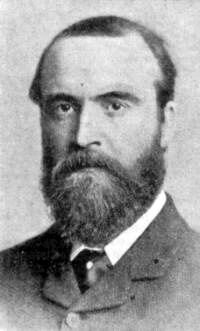
I happen to live now in the small Sussex town where Charles Stewart Parnell, sometime leader if the Irish Nationalists at Westminster, married his mistress, Kitty O’Shea.

Parnell was known as the ‘Uncrowned King of Ireland’. It may be that we are entering a similar period now, this time with the SNP and Salmond as Scotland’s claimant to the position of Uncrowned King. In which case, we need to learn from history.

The trouble with nationalism of all kinds, and it is always intolerant, is that it arises as a result of basic injustice.

The rise of the Irish Nationalists was related partly at least to the disaster of the Irish Potato Famine in the 1840s, and the sense that Westminster did not in fact have the interests of Ireland close their hearts.

I  have a feeling that a similar sense began to pervade Scotland during the Thatcher years, when bizarre social experiments were tested first on Scotland. Both the ways the Victorians treated Ireland and the way the Thatcher government treated Scotland smacked of empire. These mistakes take decades to filter though and the current rise of nationalism seems to be to follow on from there.

There are differences, of course. The Fenian terrorists were already active in Ireland in the 1880s, and there is no similar force in Scotland. Scotland does have home rule, which the Irish were never offered until it was too late. And you can hardly compare the disdain of successive London governments with the appalling neglect of the famine.

And then there is the offer to Scotland. No comparison here with the pathetic settlement offered to Manchester and Sheffield, another raft of glorified grants and special systems of centralised control.

If Manchester had shown signs of seceding from the UK in a referendum, perhaps they might have been offered that measure of economic independence they really need.

Also, the disdain of Westminster for Scotland no longer really stands up to scrutiny. The Scots have their own parliament and their own destiny, which may now be inevitable. The disdain of Whitehall for the UK cities is also now being broken down, but ever so slowly.

The cities will eventually grasp the power to innovate they need – and to regenerate their own economies (see my book People Powered Prosperity, and ebook now available). They may not manage it, even in the next parliament, but they will eventually.

As for Scotland. historic inevitability, given the parallels with the 1880s, suggest they will eventually go the same way as Ireland. Whether they do or not comes down to whether anyone can make a sufficiently inspiring case for the development of Scotland inside the union as they can outside.

Can they have a parallel currency inside? Can they develop their cities on a more European model? So far, this task has not even begun.

Wednesday, 4 February 2015

Clinging On for dear life: what to do about it

I must say, I feel like a Liberal today.  I spent yesterday being criticised by a Conservative councillor for my book People Powered Prosperity, and last night being criticised by a Labour councillor for pandering to middle class educational angst in my Radio 4 programme Clinging On (now online).

This pattern of argument isn't logical.  Being criticised by right and left simultaneously doesn't make me correct, but it might constitute evidence in that direction.  Personally I'd settle for Gillian Reynolds' verdict on the programme in the Telegraph this morning: "Rivettingly pertinent".

In fact, she was talking not just about my programme, but also Robert Peston's programme on gross inequality that went out the same day, and asking similar questions.  And the question you can't help asking in this context is - what can be done?

I've set out an approach to rescuing the middle classes in my book Broke.  It involves an economic strategy - building a new entrepreneurial niche to replace the middle management niche which supported the middle classes in the last few generations.  It also involves a political strategy to support the radical anti-trust and entrepreneurial support that will be needed.

But what about the underlying problem: we have built an economic system based on corrosive and controlling debt - just as the Romans did in Palestine, the Spanish did in the New World and the British did in India: saddling people with debt is a way of making them work more frenetically.  The system also funnels wealth upwards to the masters of the universe.

What can be done?

Thomas Piketty has suggested an international asset tax, which will not be simple to negotiate.  Tackling tax havens will help, but not while the next generation of ubermenchen - the internet platforms - are knitting bags for our heads like Madame Lafarge.

Other international tax systems, like the Tobin Levy or Robin Hood Tax may also have to wait for an international consensus that may never emerge.

The pathetic failure of the developed world to shape an effective banking system, especially in the UK, after the 2008 debacle, is a symptom of this same problem: there is no alternative that is being discussed effectively in the mainstream.  They remain locked in the world shaped in 1980.

That alternative will emerge over the next five years, but there is a Liberal solution I will be talking about during that period.  It isn't sufficient.  It does not quite encompass the promise of the phrase 'pre-distribution' coined by Ed Miliband Mark I (sadly forgotten, like so much else, by Ed Balls).  But it is a start.

We need that radical anti-trust movement.  No company should have more than 20 per cent of a national, regional or international market.  The new emerging internet tyrants - I can't think of a better word - need breaking up, and we will need to remain in the European Union to have the clout to do that.

But for some reason, these issues - the demise of the middle classes, the mega-rich, the emerging monopolies that will rule us - hardly get a look in to the mainstream political debate.

Subscribe to this blog on email; send me a message with the word blogsubscribe to dcboyle@gmail.com. When you want to stop, you can email me the word unsubscribe.

Tuesday, 3 February 2015

Lefties, protectionism and people-powered prosperity

9780992691943
"The problem with David Boyle and his sort is that they're too buried in their bien pensant leftiness to realise that the best and strongest argument for localism is actually a conservative argument..."

Bien pensant lefty?  Moi?

It is a step towards the kind of debate we wanted to create with my new book People Powered Prosperity, that Conservative councillor Simon Cooke, a thinking blogger, has produced a thoughtful response.  But I can see - never having met each other - that he doesn't understand where I'm coming from.

Let me step back a moment.  People Powered Prosperity began as a project, funded by the Friends Provident Foundation, to translate economic localism and resilience into terms that the Treasury might understand - and vice versa.  We had found, after a dialogue begun with the Chief Secretary to the Treasury that, once we talked to Treasury officials, there was a definite translation job to be done.

We set out, not to propose policy solutions, but to try and explain why the various sides found it so difficult to understand each other.

I have always felt, and feel now, that the arguments for localism are largely liberal, but there are good conservative ones too, for the reasons Chris sets out.  A more robust local economy, with independent businesses, is more resilient, more human, and it stays the same - all good conservative arguments.

I'm not sure if Chris was advocating the kind of big scale combination that he was caricaturing.  I think he was saying it was the logical extension of green thinking.  I don't think he is right about this.  I think most bigger scale factories, units or organsiations are big because of muddled thinking about economies of scale.  It is about hiding the externalities more effectively, rather than including them.

Most big organsiations, companies and units I know are more wasteful, less efficient, less human and less effective than smaller ones - but of course there are exceptions to this.

But where Simon Cooke gets it wrong, it seems to me, is that there are no other economic arguments for networks of small businesses than a warm conservative feeling inside.  These are mine:

1.  They keep money circulating locally for longer, so - with the same amount of money coming into the local economy - they produce more wealth.

2.  They often pay better and provide more flexible employment.

3.  Twenty small businesses is more resilient, more likely to get through a global downturn, than one factory on the outskirts.

4.  They provide economic independence, imagination and innovation in a way that big companies can't.

That is not bien pensant leftiness.  As Simon says, it looks a good deal more like conservatism, with a dose of old-fashioned free market Liberalism.  Because big business without small business challenging from below is just monopoly by another name.  It is the very opposite of the free market.

So I don't accept that economic localism is about protectionism.  It can be, of course.  But not the kind we are advocating.  It is about making sure the economy is more interdependent, more competitive, more diverse, more challenging, more downright exciting then when you have a few unchallenged, unchallengable monoliths to deal with.

Still, how about you make up your own minds?  People Powered Prosperity, by David Boyle and Tony Greenham, is published by the New Weather Institute. http://www.newweather.org/projects/towards-a-people-powered-prosperity/


Monday, 2 February 2015

When are the middle classes allowed to speak up?

I am pleased, not to say excited, to announce that I'm taking to the airwaves tomorrow (Tues) in the Radio 4 documentary Clinging On: The Decline of the Middle Classes.


As I explained in the Guardian on Friday, I don't quite understand why it is that admitting you are middle class in public should be such a difficult thing to do - but it is difficult, as you may have heard me saying on the various trailers for the programme.

It is even more difficult to admit it and then to complain the the middle classes are getting a raw deal.  We generally speaking prefer to suffer in silence, behind drawn blinds, assuming it was somehow our fault and our shame - not seeing that there's any kind of pattern.

And the reason is that, it doesn't matter how many times you assure people that you are not saying that the middle classes have it worse than anyone else - quite the reverse - and that this isn't about starvation exactly, you will still have people accusing you of whingeing, or re-opening the class war, and of a range of rather less flattering things.  These have been popping into my email in-box since my Sunday Times article about the programme yesterday.

Even so, Nick Curtis is a splendid writer and it almost feels a privilege to be beaten up in print by him in the Evening Standard.

Under a large picture of John Prescott, looking seriously constipated, this is how he caricatures what I say on the programme:

"Only a tiny few working in the financial sector can now afford the appurtenances many took for granted, like a home of their own or a chance to save little Sophia and Oliver from the horrors of (cringe) state education. Because the cost of living is accelerating like a Bugatti Veyron with a hedge-fund manager stamping on the accelerator as he snorts ketamine off a Ukrainian glamazon’s bum-cleft..."

Quite so.  But look.  What do Curtis and the other critics want the middle classes to do?  Shut up entirely about the economic mega-trends that are seeing them squeezed by the ultra-rich?  Wait until their children can afford nowhere to live in south east England - rented or bought - unless they embrace financial service careers?  Or is it somehow impolite to point out that the interests of the working classes and the middle classes - in fact nearly everybody - are now largely aligned?

Or do we just shut up, keep quiet, and continue with the idea derived from the twentieth century - that the interests of the two classes are fundamentally opposed?

Because this isn't just to do with rising prices.  It is about a future society that consists just of a hugely wealthy, tiny class of ubermenschen - in finance or the beneficial owners of the internet platforms - and a vast sprawling proletariat, timed when they go to the loo at work, in indentured servitude to Big Landlord plc.

Or do Curtis and friends feel rather like Hyacinth Bucket, that it isn't quite the done thing to point it out?

Find out more by reading my book Broke - or tuning in at 8pm on Tuesday night on Radio 4.

Subscribe to this blog on email; send me a message with the word blogsubscribe to dcboyle@gmail.com. When you want to stop, you can email me the word unsubscribe.