Tuesday, 25 February 2014

Does the UK government want Scots to vote yes?

It really is rather peculiar.  So peculiar that historians may comment on it in years to come if the vote is unexpected, but the campaign by the UK government to keep Scotland in the union is really so badly judged, so unimaginative and ill-considered, that I begin to suspect some kind of conspiracy.

I don't really.  I don't believe in conspiracies.  Regular readers of this blog (if there are any) will also know that I am not as determinedly against Scottish independence as I should be.

I believe nations should be smaller, and that we would all be better and more peacefully governed if they were.  Despite the fear of the electoral consequences, and despite the horror of nationalism - even Scottish nationalism - I believe smaller nations is a Liberal idea, and one that would have been recognised by William Ewart Gladstone himself.

But I understand the case against independence too.  What I don't understand is why is it being put across is such a bizarrely corrosive way.

Exhibit #1.  The UK government spokespeople have been using their habitual tone of voice for squelching regional aspirations and plans - you know the kind of thing; patronising, negative, superior and miserably depressing about everything.  Sorry, your dreams are just uneconomic - that's all there is to it.  Go off and bother some other government department.  It might have been calculated to encourage the case for independence.

Exhibit #2.  They put up George Osborne, of all people, to explain to the Scots that they will not be allowed to share the pound if they vote 'incorrectly'.  Of all the people designed to cause irritation north of the border, could they possibly have found anybody better?

Exhibit #3.  This is the topical one.  Of all the issues to fight on, the management of Britain's North Sea Oil seems the least likely to imply a persuasive case for union.

The very fact that David Cameron has decided to raise this issue at all is some measure of the denial in the UK establishment about how badly North Sea Oil has been handled over the past generation.

While Norway saved the profits from the oil windfall, for investment in their own people, successive UK governments organised things with their usual dull short-termism, just adding the revenues to the bottom line until it was all used up.  Consequently we never used the proceeds to re-equip UK manufacturing.  We never used the proceeds to provide us with modern, renewable energy.

North Sea Oil pushed up the value of the pound, throttling what remained of the old UK manufacturing base - and we never used the proceeds to invest for the future.  It allowed us to cling too long to fossil fuels - and we never used the proceeds to gear up for the future.

When I tried to come up with a list of the ten most disastrous political decisions since 1945, for some reason which I can't now remember, I put the failure to invest the proceeds of North Sea Oil at the top of the list.

Fortune magazine wrote about the Norwegian oil fund - now the biggest sovereign wealth fund in the world - a few weeks back and revealed political divisions about exactly how it should be used.  But let's face it, that would be a good problem to have.

Thanks to the miserable short-term thinking of our governments, we will not be agonising about how to spend the equivalent of Norway's $830 billion.

So ask yourself: why does David Cameron bring it up?  Is it because he doesn't know any better?

Monday, 24 February 2014

We need to be nervous of Google's investment in robots

It's a funny thing, but just 48 hours after I posted the question about what makes Alan Turing the ubiquitous English hero for the 2010s, then the Observer reports the next twist in the tale about the famous Turing Test.

Let me quickly explain for the uninitiated.  The test was set by Alan Turing in 1950 as a way of deciding mathematically whether or not a computer could think.  Turing suggested that the test would be passed when you couldn't tell whether you were taking to a human being or a computer in written conversation.  He believed that moment would have arrived by 2000.

So when the world's leading apologist for Artificial Intelligence, Ray Kurtweil, the author of The Age of Spiritual Machines, talks about that moment happening by 2029 - then it is already nearly 30 years late.

I'm not a big fan of the fringe enthusiasts of AI.  This is not to say that I believe somehow humans can never be outwitted by a computer.  We constantly are.  But the Turing Test has been bundled up with a whole range of extra peculiarities it was never intended to serve, and in particular about human nature.

Turing certainly believed, as Kurzweil does, that computers will be able to tell jokes and flirt - it was these issues which dominated the debate back in 1950, as you can find out in my new Kindle Single about Turing, Alan Turing: Unlocking the Enigma.

The first problem is that, actually, the bar is pretty high.  The American philosopher Daniel Dennett suggested this question to tell the difference between a human and a computer;

“An Irishman found a genie in a bottle who offered him two wishes. ‘First, I’ll have a pint of Guinness,’ said the Irishman, and when it appeared he took several long drinks from it and was delighted to see that the glass filled itself magically as he drank. ‘What about your second wish?’ asked the genie. ‘Oh well,’ said the Irishman, ‘that’s easy. I’ll have another one of these!’ Please explain this story to me, and tell me if there is anything funny or sad about it.”

Dennett said that, if a computer could genuinely answer this question to the satisfaction of a human interrogator - with all its complicated social peculiarities - then yes, then you could certainly say it could think. It is still unclear whether that will ever happen.

The second problem is that these are questions about the nature of humanity. The roots of the Turing Test in logical positivism and English philosophy is part of the problem. Turing was trying to find a way – not to decide about the human soul but whether machines could think. He saw no real distinction between whether the computer could fool an interrogator that it was human and whether it was actually thinking.

That raises other questions too.  Is the computer doing the same as a human being when it flirts and tells jokes?  Or does that beg the question?  Is its motivation the same?  Does it matter?

But what really unnerves me about all this, and Google's link up with Kurzweil, is that it plays into a corporate agenda which asks us to believe that a virtual doctor or teacher is indistinguishable from a real one - or, as Kurszeil says, that virtual sex will be better than the real thing.

This not only misunderstands human nature but risks fobbing all but the ultra-rich off with a machine in the classroom and surgery, unaware that it isn't the basic functions of teaching that are important, but the relationship with another flawed human being that makes it work.

I may say that this may also be the problem with virtual sex, that perfection misses the point - it is the less than perfect human being that makes it worthwhile, and makes the teaching and medicine effective.

Find out more, not just in my Alan Turing ebook, but in my take on the future of authenticity, The Age to Come.

Subscribe to this blog on email; send me a message with the word subscribe to dcboyle@gmail.com. When you want to stop, you can email me the word unsubscribe.

Saturday, 22 February 2014

Why are we so fascinated by Alan Turing?

Benedict Cumberbatch captures "vulnerability, genius and arrogance" of Alan Turing, says producer
It is now 102 years since he was born, or nearly, but this really appears to be Alan Turing's moment.

Not only was the government moved to give him a pardon, rather belatedly, for his conviction for homosexual acts back in 1952, but the stills have been released to great excitement for Benedict Cumberbatch's portrayal of the man in the film The Imitation Game.

It is even being talked about as an Oscar contender for 2015.

Now even the hotels of Manchester, where he lived and died, are joining in.  Jurys Inn Manchester has just published their own guide to his life.

What is it about Turing that speaks so much to our own age?  On the face of it, this is quite simple.  He was brave enough to be himself about his sexuality - in fact, he managed to flout respectability, to the frustration of his mother, for most of his life.  He famously wore a gas mask on his bike to avoid the pollen, and held his trousers up with a piece of string.

As the father of the computer age, and the great prophet of computability, he is a good nominee for the creator of our world.  He was a problem-solver, the breaker of the unbreakable Enigma code, when our age is so full of uncrackable problems.

I've had the chance to think about this myself, because the short biography I wrote about Turing has just been published as a Kindle Single (Alan Turing: Unlocking the Enigma).

My own feeling is that nothing about Turing is quite straightforward.  Confident in his own abilities, amusing and witty with friends, yet shy and uncertain in company, except with the few people he trusted. Relying on relentless logic, yet also managing an almost mystical ability to intuit mathematical proofs.

He combined a rigid clarity and scepticism about human specialness, but he was also fascinated by fairy tales and was famously obsessed with the Disney film Snow White and the Seven Dwarfs.   One of his closest friends was Alan Garner, later the author of The Weirdstone of Brisingamen.

The overwhelming feeling about Turing, reading the details of his life – and his mother wrote a detailed tribute after his death – is just how English he was.

Many of his fellow countrymen failed to understand him at all, and he worked part of his career with American and German mathematicians at Princeton University, but he was deeply English in his sheer practicality, for the literalism with which he turned intellectual ideas into practical projects, and for his empiricism.

He was a true successor to the great British empiricists, John Locke and David Hume, and the exclusion of every consideration except sense data. It is a theme that keeps returning in his life and work.

But I think our fascination may be more subtle than that.  We are beginning to regard Turing is the very apotheosis of a man of genius crushed by the petty mores of his own day, and perhaps that is a little how we all regard ourselves.  No wonder we admire him: he was the real thing.

Subscribe to this blog on email; send me a message with the word subscribe to dcboyle@gmail.com. When you want to stop, you can email me the word unsubscribe.


Friday, 21 February 2014

Why Lean is so inefficient

It's no good. I simply can't resist it. The old monsters at management consultants McKinsey & Co are just too tempting a target, and not just because they are so responsible for the shape of the modern world and its organisations - but because they are so slow to grasp why those organisations are stuck.

I subscribe to their online newsletter and it is always well-written and informative, and sometimes so wonderfully old-fashioned that I find it irresistable.

The elite consultancy, named after its founder James Oscar McKinsey, the first management consultant, still lives and dies by the highly misleading maxim “everything can be measured and what can be measured can managed”.   And therein lies the problem.

What actually inspired me to write this post was their new hymn to the idea of Lean, which as anyone who works in big organisations knows was attributed to Taichi Ohno at Toyota, and is now being rolled out everywhere from the NHS to the way car insurance works.

This is what they predict:

"An unprecedented amount of product-performance data is now available through machine telematics. These small data sensors monitor installed equipment in the field and give companies insights into how and where products are used, how they perform, the conditions they experience, and how and why they break down. A number of aerospace and industrial-equipment companies are starting to tap into this information. They are learning—directly from customer experience with their products—about issues such as the reliability of giant marine engines and mining equipment or the fuel efficiency of highway trucks in different types of weather."

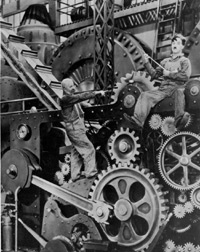
Now, bear with me a minute.  Although Lean emerged from assembly lines, Ohno was not actually very impressed when he visited Ford immediately after the Second World War, as I describe in my book The Human Element.

There was too much extra work from bad workmanship, and there was far too much extra stock lying around taking up space. On the same visit, he and his team happened to shop in a supermarket called Piggly-Wiggly and then they got excited. The supermarket had a system that only ordered enough stock as it was bought by customers. 

It was the beginnings of the Just-In-Time delivery systems that so many companies use today, and the basis of Toyota’s success.

Toyota’s ‘lean’ systems are all the rage in the UK now, and it makes a lot of sense.  It tries to bring jobs back together again rather than splitting them all up into little bits. 

The problem with Lean outside a factory is that it keeps the Toyota version of the assembly line at its heart. It requires standardised systems and processes. It means measuring the speed that everyone does their jobs and holding them to the new system. 

 It is therefore a prime candidate for putting the processes into inflexible concrete, and Lean IT is the latest twist in what is on offer from IT consultants. 

The trouble is that Lean assumes everywhere is a factory, a little like Toyota. The central purpose may be to improve the flow by bundling jobs back together again, but it isn’t necessarily about getting people back face-to face – and it certainly doesn’t mean letting staff get on with their jobs in the way they know best. Quite the reverse.

It is the obsession with data that is the clue. Of course these tweaks are important, and they do improve services. I know government functions that have been transformed just by moving the photocopier a bit nearer the front desk.

But here is the problem.  Lean assumes that the basic system will always stay the same.  It wires in data sensors and processes, and software systems, that make sure it does.  It allows no leaps of imagination - no sudden realisations that, actually, what you need is a different kind of institution altogether.

This is McKinsey's basic weakness, and it is a big one - as one of their biggest critics, the systems thinker John Seddon has explained.  This kind of Lean approach tends to lock organisations into their own administrative and control systems, even when they are doing the wrong thing, desperately improving the efficiency of it - and wondering why no major leaps forward are possible.

This is the problem with targets too and with the New Labour approach to services, which still clings on to public services in so many ways.

It allows you to improve the throughput of the NHS, as if it was an assembly line.  It allows to to improve the efficiency of the existing system until it can improve no more.

What it can't do is tell you, given that you want to improve the broad health of the population, whether you might need a different kind of organisation altogether.

Subscribe to this blog on email; send me a message with the word subscribe to dcboyle@gmail.com. When you want to stop, you can email me the word unsubscribe.

Thursday, 20 February 2014

Why Popper is the key to modern Liberalism

Imagine yourself in the coffee houses of eighteenth century Edinburgh, in the elegance of the New Town.  It was there that the philosopher David Hume first cast doubt on scientific method, peering at ideas about what causes what and finding there was nothing there.

All you can do, he said, is say that events tend to happen together. Yet, if we can see nothing causing things under the philosophical microscope, it means a big logical problem for the scientists. 

It doesn’t matter how many times they do an experiment, or watch the sun rising bang on time, it doesn’t mean these events are any more likely to happen tomorrow.

Two centuries after Hume was writing in Edinburgh, the Viennese philosopher Karl Popper, a refugee from the Nazis, came up with an interim answer. But, more importantly, he also applied it to politics and organisations. 

You may not be able to prove what you believe about the world, no matter how often an observation or experiment takes place, but you can disprove it. 

Popper used the example of swans. It doesn’t matter how many white swans you see, it still doesn’t prove that all swans are white. But if you see a black swan, then you know they are not.

Popper was writing during the Second World War, his home city was in the hands of totalitarians, and he quickly found himself applying this insight to politics too. In doing so, he produced one of the classic twentieth century statements of philosophical liberalism, The Open Society and its Enemies. 

He said societies, governments, bureaucracies and companies work best when the beliefs and maxims of those at the top can be challenged and disproved by those below. This has huge implications, not just for effective societies, but for effective organisations too.

Popper was flying at the time in the face of the accepted opinions of the chattering classes. They may not have liked the totalitarian regimes of Hitler or Stalin, but people widely believed the rhetoric that they were somehow more efficient than the corrupt and timid democracies. 

Popper explained why they were not, and why Hitler would lose. Anybody who has read Antony Beevor’s classic account of the Battle of Stalingrad, and the hideous slaughter and inefficiencies brought about by two centralised dictators who had to take every decision personally, can see immediately that Popper was right. 

Real progress required “setting free the critical powers of man”, he said.  More about this in my book The Human Element.

I believe Popper was the key Liberal philosopher of the past century or so.  I said so many times ten years ago, during the Lib Dem's commission on philosophy, but his name was still omitted - such is life on policy committees, I can tell you.

But he is even more important now.  The possibility of Popper's challenge from below – in what he called ‘open societies’ – is the one guarantee of good and effective government or management. Those human beings at the front line, those most affected by policy, will always know better about their own lives or their own work than those at the top. 

Open societies can change and develop; closed societies can’t. Hierarchical, centralised systems, by their very nature, prevent that critical challenge from below.

So if want to sum up why the Blair-Brown years devastated our public services, you need look no further than Popper.

So I was pleased that Jonathan Calder included a fascinating interview with Popper before his death.  These days, when authoritarian government is creeping back, it is worth remembering why it is less effective - and less efficient - than the kind of structures which are open to challenge from below.

Subscribe to this blog on email; send me a message with the word subscribe to dcboyle@gmail.com. When you want to stop, you can email me the word unsubscribe.

Wednesday, 19 February 2014

Why it's dangerous when the middle classes feel betrayed

Years ago, my friend Iain King cast my horoscope in return for an omelette.  "Yes, I see this in a lot of Lib Dem charts," he said.  "I think it means unreasonable optimism."

Which is a way of explaining that I've always been optimistic.  I don't feel comfortable as Cassandra.  I don't believe in disaster.  I certainly don't believe in extrapolating disastrous trends.

Yet really, sometimes, the middle classes could try Cassandra's patience.  There they are in the UK, staring oblivion in the face in less than a generation, happily shelling out for their indentured servitude by mortgage, and taking out their occasional frustrations by beheading the chair of the Environment Agency and other symbolic officials.

I wrote a book about it.  Rather a good one, though I say it myself (it's called Broke: How to Survive the Middle Class Crisis).  It isn't pessimistic, in fact - it suggests a way out.  It even predicts a way out.

But I do occasionally wonder, especially yesterday - when the commentators hail the drop in inflation to 1.9 per cent and the rise in average house prices to a quarter of a million pounds - why there is so little debate about the big trends.

Not whether there is a house price bubble this winter, but whether there has been a disastrous house price revolution in the last 30 years - and whether, if it goes on the same way for another 30 years, the average house price in the UK will actually be £1.2m (it will).

So it is a relief that a commentator with her finger so much on the pulse, like Lucy Mangan, has raised the alarm (thank you, Lucy, for bringing me into the debate as well).  This is what she says:

"Already among my friends there is a sense of betrayal. It used to be (we know, from the parents who lived through it and with whom we are increasingly moving back in to save on housing or childcare costs), that if you played the game, if you did all the right things – were thrifty, diligent, cleaved to the principle of deferred gratification – the system would reward you with leisure time, spare cash and a certain freedom from worry in the short and in the long term. Now the feeling is that you have to outwit the system in order to survive it. Win the lottery, have a brilliant business idea, marry money (no longer a dream confined to women, by the way) or inherit it from several forgotten aunts or a neighbour whose beloved cat you once rescued – something semi-miraculous that will provide the protection modest living, hard work and hard saving once did."

That is exactly right.  Because, despite their denial, I believe Lucy Mangan is right that the middle classes feel that something fundamental has changed.  

These are dangerous moments.  When the middle classes understand that they have been betrayed, by the politicians who governed in their name - and by the financial services who looked after their money - it can get ugly.

The rise of the nationalist right across Europe is one symptom of this betrayal, and of the failure of mainstream political parties to provide any kind of solution - even to articulate the problem.

It is, after all, as much a moral problem as an economic one, because the whole system of deferred gratification on which English middle class life depends has crumbled away.  And every new round of bankers bonuses removes a few more pit props supporting it.

So I am nervous about the future for fear of the politics of betrayal, as much as I am afraid of the economic future for my children in the new sprawling proletariat.

But I am still optimistic.  Because, as Lucy Mangan says, the middle classes still have the power to shift the situation.  If they can grasp what is going on.

Subscribe to this blog on email; send me a message with the word subscribe to dcboyle@gmail.com. When you want to stop, you can email me the word unsubscribe.

Tuesday, 18 February 2014

The policy lever to tackle loneliness

For some years now, I've been pedalling the idea that 'evidence-based policy', as described by Whitehall, is often a means of avoiding doing anything.

Our official standards of evidence are somewhat naive.  Because it relies on hard objective evidence in numerical form, which - because the objective numbers are chained to descriptions (anything but objective) - is pretty much impossible to find.

Evidence-based policy can so often be the endless search for evidence which will never be forthcoming.  A recipe for permanent inaction.

This is not to say that we need policy without evidence, of course.  But that is another story.

But what I find strangest is the way that, even when evidence is forthcoming, it still seems to take a generation or so to work its way into policy - especially if it is in any way inconvenient.

The evidence that is pouring out of Holland, for example, on the health impacts of trees and green space in cities might be water off a duck's back to planning authorities.

And what are we to make of the evidence about the health impacts of loneliness, set out in stark terms in the Guardian today?

"Loneliness has dramatic consequences on health. Feeling isolated from others can disrupt sleep, raise blood pressure, lower immunity, increase depression, lower overall subjective well-being and increase the stress hormone cortisol (at sustained high levels, cortisol gradually wears your body down)."

These were taken from an important report revealed in Chicago over the weekend by Professor John Cacioppo.  The health impact of loneliness seems to be equal to heavy smoking.  Well, it is evidence of a kind.

But even among the researchers who have understood these things, there seems little understanding of policy options.  Governments seem to believe that loneliness is none of their business, despite the financial costs.  But even the scientists, since they usually seem to be doctors, fall back on medical interventions - with proposals for various kinds of psychotherapeutic interventions or shared talking therapies.  Friendship pills can't be far away...

It is nearly fifteen years ago since I was involved in launching the Rushey Green Time Bank, at a GP surgery in Catford - still going strong - and it seems to provide a glimpse of a solution.

It means setting up the kind of mutual support infrastructure that gets people together, not to talk (except incidentally, of course) but to do things: visiting, befriending, giving lifts, visiting people just out of hospital, fetching medicines, doing small repairs...

In short, doing all those things which we kind of imagine public service professionals might do but never will - broadening and deepening our services.

Loneliness is going to be solved, not by encouraging people to talk about their isolation, but by organising a mutual support infrastructure, on a huge scale, though public services.

Because, in the end, if people feel they are playing a useful role - which is denied so many recipients of our services - it can transform their lives.

But this is tough for the wonks to grasp.  They want to treat people or involve people or get them to talk.  Anything, it seems, rather than finding ways of encouraging them to act.  Strange.  The fear of action by ordinary people runs very deep.

But there is an alternative if we fail.  We can do what the Chinese have done: pass a law forcing children to visit elderly parents..