Just when you thought you were safe from French Connection UK (known for some years now as fcuk), there is a trend identified by the New York Times of using swearwords in brand names - Eggslut restaurant, Holy Crap cereal, Fat Bastard wine, you know the kind of thing.
It seems to me that this may be the beginning of the end of the great branding phenomenon, which so excited the marketing world in the 1990s. We were told we would all love our brands, when the truth is we usually find them infuriating.
This is what I think is happening, as I explained on the Guardian's Comment is Free site today.
Monday, 28 April 2014


Tuesday, 22 April 2014
The delusions of the first decade of the century
 The news that HMRC is preparing to sell our anonymised tax data has made me wonder a little at how we will remember this decade when it is over.
The reason I wonder is that, despite the launch of the Turing Institute - at least as a gleam in the Treasury's eye (and I'm sure my e-biography of Alan Turing was deeply influential here, especially now it reached #1 in one Amazon category last weekend!) - I'm not completely convinced that Big Data will really prove as important as we currently believe.
The reason is that it suffers from precisely the same weaknesses as any data. It gives the impression of hard numbers, evidence-based hardheadedness, objectivity and all that, but the numbers are also chained to definitions, and these are endlessly malleable.
The pursuit of Big Data is not going to be pointless, but it will be stuffed full of delusions - which won't be apparent until the decade of Big Data is well and truly over.
This thought has led me to have a think about the previous 'noughty' decade - the first decade of the twenty-first century - and the little delusions we used to tell ourselves. I've boiled these down in my head into three, and here they are:
Delusion #1. There is no need to make anything. The odd thing is that all our mainstream political parties bought into this delusion to some extent, that manufacturing was somehow below us in the UK - that we had somehow progressed beyond it. This was central tenet of the Treasury under Gordon Brown and Ed Balls, that financial services was the way we were going to specalise in the global marketplace - without realising that financial services was also the cuckoo in the nest: it eventually drives out everything else. Thanks to Vince Cable and others, UK manufacturing is slowly being clawed back. So that little delusion is, I think, over - even if we still haven't understood some of the practical implications for the kind of financial services we need. The current financial sector is wholly ineffective when it comes to providing for the capital needs of manufacturing.
Delusion #2. There is no such thing as geography. This was a delusion foisted on us by the internet and AI pioneers of the US West Coast. You couldn't be in any kind of policy meeting without someone saying something fatuous about 'online communities' being the future of community. A decade later, I think most of us realise that, if we believe our Facebook friend are our real friends, we are likely to face a lonely future. The truth is that geographical communities, awkward and authentic as they are, are the only effective ones, for most of us - though of course an occasional exchange online can't be a bad thing.
Delusion #3. Everything can be measured. This was the greatest delusion of them all - the quotation is taken from the ubiquitous management consultancy McKinsey - when the truth is that the really important things, from love to happiness, are wholly unmeasurable. This delusion still has many of us in its grip, and especially as we hurtle into the decade of Big Data, which suffers from the same kind of drawbacks.
Of course, in practice, these were also the delusions that were written into the New Labour years like the writing through a stick of rock, and this is where it matters that we are still in the grip of delusion #3. In practice, we subjected our services and voluntary sector funding to incisive questioning over their impact, asked them for evidence, and then handed the money over to institutions that were able to provide it.
It would be quite reasonable, were it not for two problems. A huge percentage of the time, energy, creativity and effort was shifted from making things happen to producing data, which was flawed. Of course it was flawed: people's jobs and livelihoods depended on it being good.
The second problem was that we handed services increasingly over the new outsourcing giants, because they were able to produce reliable data about their impact, and then sat back and breathed a sigh of relief.
It is slowly becoming clear, unfortunately, that the production of data was the only thing they could do. It was the sole purpose of those great outsourcing monsters, the central purpose of their design. It seems likely that they can produce the data, but can't actually have an impact - and this very distinction was what was being denied.
So we remain in the grip of at least one delusion of the previous decade. Here's to its speedy unmasking...
Thursday, 17 April 2014
A temporary hiatus
All good things must come to a temporary hiatus, and I'm afraid it is the same with this blog - for a little while. I'm working at the Guardian, in the Comment team, which is fascinating - and temporary - but I find I can't both blog and come up with ideas for everyone else at the same time.
I'm not going away completely. I'm already itching to write about a whole range of things, just from my last train journey past Battersea Park - and I will do. But I won't be appearing here quite so often.
But I'll be back later in the summer, if not before. Thanks so much for bearing with me, as you have in the past as well. See you soon.
I'm not going away completely. I'm already itching to write about a whole range of things, just from my last train journey past Battersea Park - and I will do. But I won't be appearing here quite so often.
But I'll be back later in the summer, if not before. Thanks so much for bearing with me, as you have in the past as well. See you soon.
Wednesday, 16 April 2014
Turing biography on special offer at 99p
 This is rather a late acknowledgement of the government's recognition of the great computer pioneer Alan Turing in the budget. In short, they have set aside £42m for a university unit to study big data, and they are going to call it the Turing Institute.
The announcement came just three months after Turing was given a royal pardon, rather belatedly, for his conviction for homosexuality in 1952 - which started the chain of events which led to his suicide two years later. And, yes, it was suicide.
It also comes just a few months before the release of the film about his code-breaking work at Bletchley Park, starring none other than Benedict Cumberbatch, who is beginning to corner the market in portraying genius.
There is clearly something in the ether about Turing at the moment.
Which is all to the good because my e-biography of him, Alan Turing: Unlocking the Enigma, is on special offer from tomorrow and for the rest of the week. You will be able to download it for 99p - which is pretty good for 20,000 words...
Tuesday, 15 April 2014
The new generation tower blocks are just as disastrous
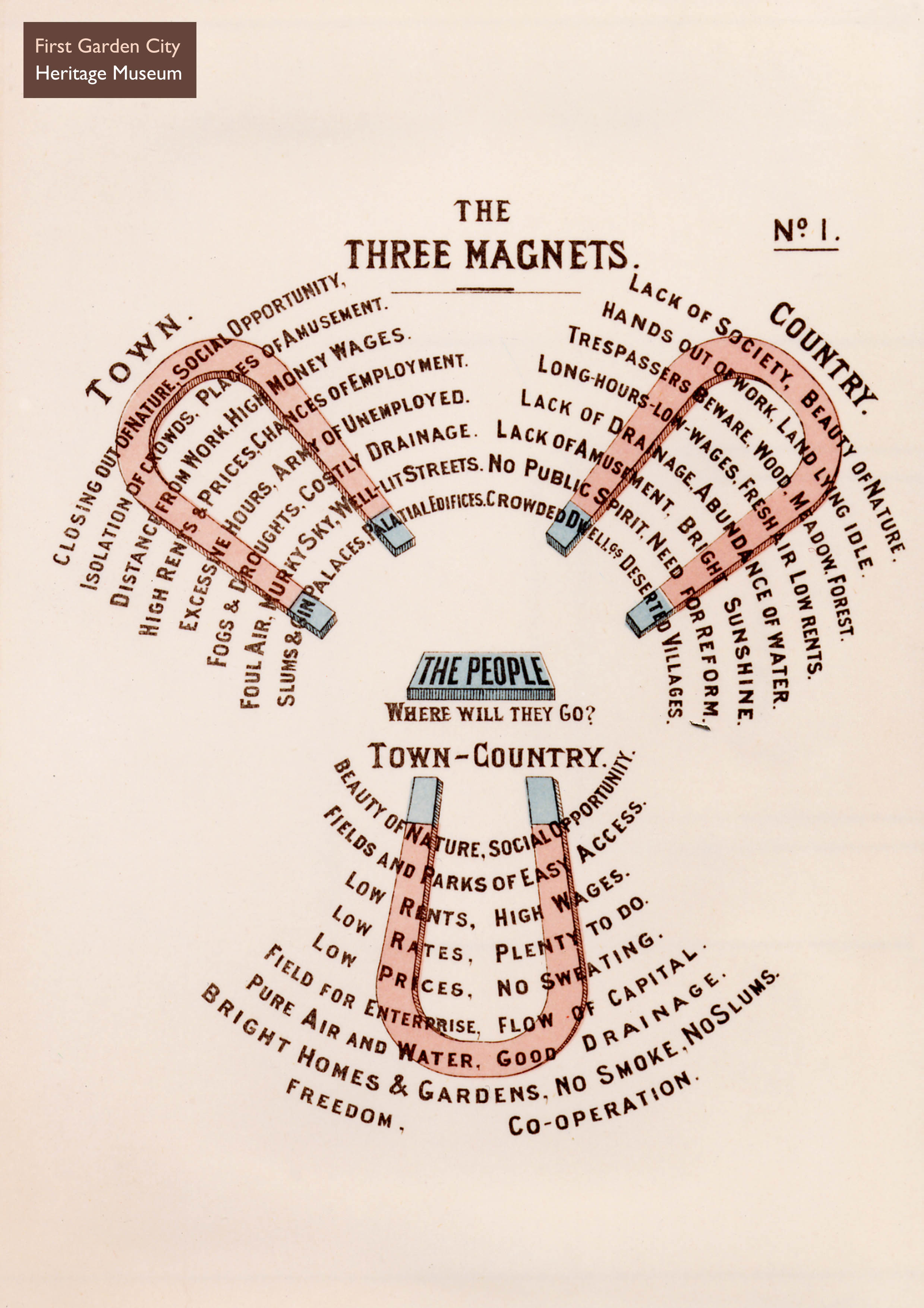 I am fascinated by the announcement of three new garden cities by the government yesterday. I'm aware that this was finessed by Nick Clegg in the teeth of opposition from some Conservatives who fear that their own constituencies will provide the sites.
After all, the fear of fear itself is quite enough when it comes to large scale developments.
The garden city idea, as almost everyone must know by now, was originated in 1898 by Ebenezer Howard to simultaneously stop the overcrowding and overheating of cities and to regenerate rural areas.
His ideas were backed by important sections of the Edwardian Liberal Party, especially those who were interested in co-housing and other kinds of mutual housing developments - because they were attracted to Howard's stipulation that the land beneath his garden city must stay in community ownership.
That, I fear, may be leap of imagination too far for the Treasury. And it's a pity, because separating the ownership of the land from the ownership of the buildings may be an important way that homes might be made more affordable.
That history is pretty familiar. The arguments that came later have largely been forgotten, but they are relevant today as well.
First, there was the great row of the first generation garden city enthusiasts with the proponents of 'garden suburbs', basically a clash between those who wanted freestanding developments to prevent unplanned city sprawl - and those who preferred the sprawl.
Second was the great row of the second generation garden city enthusiasts in the 1940s and 1950s with the modernist architects - and here Frederic Osborn (Howard's former assistant) found himself on the losing side.
He was largely beaten by an alliance between architects and conservationists, who believed that people should live in high density housing - preferably towers - to prevent damage to the countryside.
It was an alliance that was mirrored politically between the urban Labour boroughs who wanted to keep their voters in place, with the shire Tories who wanted to keep Labour voters out.
The result was the first, disastrous and destructive, generation of tower blocks. Still not paid for. Still offering an inhumane, rabbit hutch living to the poorest and least powerful.
Now we have the emergence of the second generation of tower blocks. These are just as badly planned (see the comments by the former London planner Peter Rees) but they are different. They are ponzi homes, for rich investors, designed to stay empty as they rise in value.
They are backed by the same alliance between architects and conservationists and for the same reason. But they are just as inhuman as the first generation, and they will have the same effect on the rest of us - they create wind, disorder and they belittle our humanity.
Subscribe to this blog on email; send me a message with the word blog/subscribe to dcboyle@gmail.com. If you want to stop, you can email me the word unsubscribe.
Monday, 14 April 2014
Something is emerging beyond conventional capitalism
The co-operative sector is having a tough time at the moment. Not because the 6,000 or so mutuals in this country are in any difficulties - quite the reverse - or even because the biggest and most impressive employee mutual in the country is failing to thrive.
On the contrary John Lewis and Waitrose are storming ahead. But there is no doubt that the Co-operative Bank (not actually a co-op at all, but owned by a co-op) is causing a sense of crisis for everyone else.
And because the bank is having a torrid time, its 30 per cent owners the Co-operative Group are in some disarray as well.
It has a hugely complicated democratic structure, the regulators are crawling all over the board, and the whole edifice has been funnelling money pointlessly to the Labour Party for years.
But to make matters worse, there is the business press urging them to adopt precisely the same dysfunctional structure as every other plc - a choice, as far as I can see, like the Devil and the Deep Blue Sea.
Lord Myners' proposals, as I understand it, are a potential middle way forward, at least as he explained it in the Guardian this morning.
I agreed with the long-standing co-operator Vivian Woodell in the radio last week, when he said that he thought the way forward for the Co-op would be to be more like a co-op not less like one. There is certainly no point in the Co-op at all if it is exactly like every other bog standard company in the UK.
So let's take a deep breath and a longer view, because there was a moment a century ago when the co-operative movement was poised to hold the line between conventional capitalism and state socialism, especially in housing.
Backed by Liberal politicians like Henry Vansittart Neale and Henry Vivian, there are records of over 8,600 homes built by co-partnership societies between 1901-12, and there are were 35 other societies whose records have been lost. Six are still in existence.
Vivian was MP for Birkenhead, an ally of Liberal reformers like George Cadbury and Joseph Rowntree who were determined to unleash a new kind of working class mutualism that could provide for people’s needs and fight the causes of poverty. The co-partnership societies had their own direct works departments, playing fields, club houses and garden parties – and lectures: this was the great age of the lantern slide.
The co-operative movement was just the tip of a burgeoning iceberg, and the engine of much else besides. Within weeks of the start of the First World War, the Co-operative Wholesale Society was turning out 10,000 tunics a day for the army and its ships were rescuing the survivors of torpedoed vessels.
On the contrary John Lewis and Waitrose are storming ahead. But there is no doubt that the Co-operative Bank (not actually a co-op at all, but owned by a co-op) is causing a sense of crisis for everyone else.
And because the bank is having a torrid time, its 30 per cent owners the Co-operative Group are in some disarray as well.
It has a hugely complicated democratic structure, the regulators are crawling all over the board, and the whole edifice has been funnelling money pointlessly to the Labour Party for years.
But to make matters worse, there is the business press urging them to adopt precisely the same dysfunctional structure as every other plc - a choice, as far as I can see, like the Devil and the Deep Blue Sea.
Lord Myners' proposals, as I understand it, are a potential middle way forward, at least as he explained it in the Guardian this morning.
I agreed with the long-standing co-operator Vivian Woodell in the radio last week, when he said that he thought the way forward for the Co-op would be to be more like a co-op not less like one. There is certainly no point in the Co-op at all if it is exactly like every other bog standard company in the UK.
So let's take a deep breath and a longer view, because there was a moment a century ago when the co-operative movement was poised to hold the line between conventional capitalism and state socialism, especially in housing.
Backed by Liberal politicians like Henry Vansittart Neale and Henry Vivian, there are records of over 8,600 homes built by co-partnership societies between 1901-12, and there are were 35 other societies whose records have been lost. Six are still in existence.
Vivian was MP for Birkenhead, an ally of Liberal reformers like George Cadbury and Joseph Rowntree who were determined to unleash a new kind of working class mutualism that could provide for people’s needs and fight the causes of poverty. The co-partnership societies had their own direct works departments, playing fields, club houses and garden parties – and lectures: this was the great age of the lantern slide.
The co-operative movement was just the tip of a burgeoning iceberg, and the engine of much else besides. Within weeks of the start of the First World War, the Co-operative Wholesale Society was turning out 10,000 tunics a day for the army and its ships were rescuing the survivors of torpedoed vessels.
But the co-op movement went head to head with the Fabians, which took a different view. The alliances between Liberal business leaders and working class institutions like consumer co-ops, which had been the route by which people like Vivian – a carpenter by profession – had reached parliament, began to look naïve.
Meanwhile, the co-operative movement was about to be bludgeoned out of existence by the new totalitarians across Europe. Fascists in Italy burned out co-operative stores. In Vienna, where half the population was supplied by consumer co-ops, the leaders were arrested within weeks of the Anschluss.
Meanwhile, the co-operative movement was about to be bludgeoned out of existence by the new totalitarians across Europe. Fascists in Italy burned out co-operative stores. In Vienna, where half the population was supplied by consumer co-ops, the leaders were arrested within weeks of the Anschluss.
In Russia, where the co-operative movement ran its own university and central bank, all co-op property was confiscated by the Bolsheviks. Only in Iceland and Scandinavia did mutualism survive on any scale.
By the 1930s, even George Orwell was parroting the Shavian ridicule of any radicalism that was not Fabian: “If only the sandals and pistachio-coloured shirts could be put in a pile and burnt,” he wrote in 1937, “and every vegetarian, teetotaller and creeping Jesus sent home to Welwyn Garden City to do his yoga exercises quietly."
Yet there is an emerging narrative in the USA that mutuals are once again the way forward, driving a Liberal wedge between conventional capitalism, which seems unable to meet our needs, and state socialism which has failed.
Watch this clip of Gar Alperovitz, one of the the interesting of the political commentators in the USA, with years in Washington behind him, talking about the new mutuals emerging in the stricken city of Cleveland, Ohio.
There is an unusual clarity about his vision, especially for these compromised days. "Capitalism is dying," he said. "But something a lot better is taking its place."
I also think he is right.
Subscribe to this blog on email; send me a message with the word blog/subscribe to dcboyle@gmail.com. If you want to stop, you can email me the word unsubscribe.
Friday, 11 April 2014
What happens to political parties in power
 I was at an internal Liberal Democrat meeting at Westminster some weeks ago - I won't say which, but there was a minister there - and it made me think about the particular trauma of being in government, and the effect it has on people.
There is, of course, something of an inevitable divide between parties at Westminster and parties campaigning locally. For the Lib Dems, this is exacerbated by the emergence of a new cadre of special advisers and party staff who might not even have been members before 2010.
I don't want to give away much about this conversation, because it wouldn't be fair. But what took my breath away was the gulf between parliamentarians in government (deeply pragmatic) and parliamentarians who still regard themselves as grassroots campaigners.
Most Lib Dems are both - they have to be - so this tends to be a psychological divide. It is a divide in the soul. And it set me thinking about what happens to political parties once they find themselves in government.
I have no evidence for these assertions, except my own eyes. But I have a feeling that the experience, and the pressure and frustrations, affect different ideologies differently.
For Conservatives, a few years in the mangle of government, and they come out deeply cross, perhaps even arrogant. Their fundamental sense of their own entitlement to power becomes more evident. They become beset at a deep level by rage that they are being questioned at all.
Often these transformations seem to me not only to bring out the shadow side but to be experienced as major irritation. For the Conservatives, the irritation is that they are being prevented - by the leadership, the coalition, the Eurocrats, the liberal establishment - from ruling as they see fit.
For Labour, the shadow side is different. They become micro-controllers, enraged at the failure of institutions and individuals on the ground to fall into line in the way they expected. They they become arch-centralisers.
Incidentally, this means that - while I'm delighted at Ed Miliband's recent campaign about setting the cities free - I remain slightly sceptical about the ability of a Labour government to see this through.
Which brings us to the Lib Dems. Their rage in government is directed at impractical idealists, those whose failure to be pragmatic enough - to fully understand the barriers to change - are preventing them making progress.
They become arch-pragmatists, prepared to accept almost any compromise if it avoids the humiliations of powerlessness that seem inevitably to come with power. Interested only in the specific path to making things happen.
That was the difficulty when Lib Dems ran so many local councils. The councillors in power tended to forget their ideological roots, and began to believe in good, pragmatic government, and consequently lost their compass and stopped innovating.
A little pragmatism isn't a bad thing. I've had a homeopathic dose of it on the very fringes of government, and feel it has done me good. I was, after all, one of those impractical idealists, deeply committed to vague change, the details of which eluded me.
But then, maybe that's what they all feel.
What do we do about it? I don't know, but a little self-knowledge can work wonders.
Subscribe to this blog on email; send me a message with the word blog/subscribe to dcboyle@gmail.com. If you want to stop, you can email me the word unsubscribe.
Subscribe to:
Posts (Atom)


