Friday, 9 August 2013

How to make hospitals safe

Back in the 1940s, the great American theorist of ‘total quality’ W. Edwards Deming warned that assembly lines, in themselves, are not efficient at all.  Hence the huge problems with safety and care that is causing the NHS such angst at the moment.  Hence the effective campaign by Deming's vicar on earth, John Seddon, to reform public services away from the assembly line model.

Deming’s story is rather peculiar, because he found that his fellow Americans were not quite ready for this message, so he took his ideas to Japan after the Second World War, and was enormously influential.

Efficiency is all about getting things right first time, he said, because then you don’t have to do it again. He was astonished at how much the American factory system wasted, in materials and time, just by failing to pay attention to quality. The result was the enormous sums of money were spent by organisations just to put right the mistakes they had made – and splitting up jobs means more mistakes.

“Let’s make toast the American way,” Deming used to say. “I’ll burn, you scrape.”

I've looked all the way through Don Berwick's report for the government on improving care standards in the NHS, and Deming's name doesn't appear at all.  But his spirit is clearly abroad, because Berwick's commitment to openness and transparency, and an end to the blame culture, carries the Deming stamp.

More about Deming and Seddon in my book The Human Element.  But back to the Berwick report.  It got a good kicking from the influential NHS blogger Roy Lilley, and you can see why: there is a great deal of rhetoric in there - and if the NHS ran on rhetoric, hospitals would now be enjoying a hefty surplus.

It is one thing to say that care standards and safety should be the first priority of the NHS, but then nobody says it wasn't.  The real question is how to guarantee and improve standards despite all the other pressures.

But Berwick, Obama's former health advisor, deserves more credit.  The commitment to no-blame is a bold gear-change for the prevailing culture, which insists that mistakes and poor care are always the fault of someone in particular who must be disciplined, or even gaoled.

What Deming suggests, and what Seddon explains today, is that you can't under-rate the system.  Whatever the rhetoric says, if the system encourages poor care by treating the NHS like an assembly line - that is what you will get: poor care and an assembly line.

Deming’s idea of tackling poor quality in factories was to use ‘quality circles’ of staff, where these issues could be discussed without blame, as Berwick suggests. In companies like Toyota, every member of staff famously has the power to turn off the assembly line whenever they see something wrong.

Three decades later, it was clear that Japanese industry was a good deal more efficient and effective than their American competitors.  Yet it wasn’t until 1978 that Deming began to have any impact on his own country. Ten years later, there were 50 Deming societies across the USA. 

Twenty years later, they were gone again. Quality circles were not an innovation that the IT consultants could earn much from, and quality management was quickly swept away by ‘Re-engineering’, and all the rest of the disastrous McKinseyite mush of controlling IT systems and one-dimensional measures.

Those who believe that industrial assembly lines can be applied to all human work were once more in control, and with disastrous results.  That is why Berwick's report is potentially important: it has provided a potential antidote to the sick targets and compliance system: transparency and commitment to quality.

He even, sensibly rejected, compulsory candour - a rule where you have to tell patients about mistakes - because he knew the bureaucracy would kick in and regulated candour would substitute for good care.

This isn't about IT.  It is about human skills and human co-operation.  Despite the rhetoric, not because of it, Don Berwick's report could turn out to be important. 

Thursday, 8 August 2013

Is the 450 bus the solution to public service intractability?

DRL123
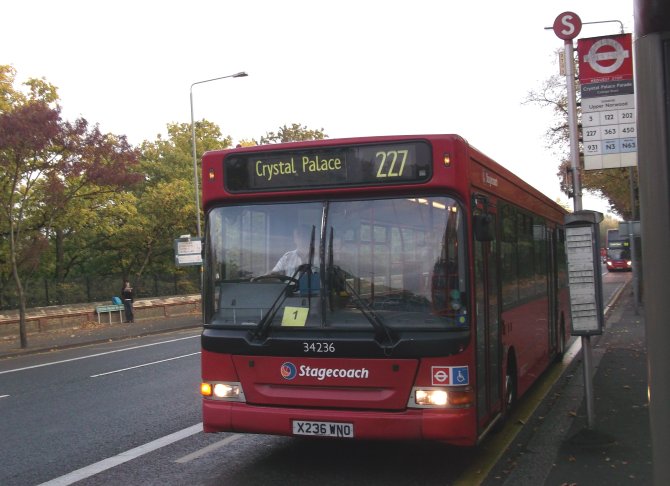
There is a kind of experiment you can do with public services where I live in Crystal Palace, and I was reminded of it today when the bus driver for the 450 waved at me as he drove by.  I wondered at the time whether it might be part of my answer for Mark Pack (see below).

There are lots of buses where I live.  If I get the 450, it is a small single-decker bus. It is usually packed full of pensioners hanging onto the supports for dear life as the driver swings them round. When everybody gets off, young and old, they often thank him. If somebody very old is clambering aboard, someone usually leaps off and helps them on. Sometimes the driver does. People also chat to each other, which is very unusual, even in Crystal Palace.

But if the 468 comes first, it is a different experience. It is the same cross-section of passengers, but this is one of those broad red double-decker buses, the motoring equivalent of a brontosaurus, making a meal of its own tail. The atmosphere is completely different: nobody talks. Nobody even smiles. Nobody speaks to the driver, though he occasionally swears at us. Nobody helps anyone on or off. You can cut the distrust with a knife.

I have thought about this a great deal. It isn’t that there are more regulations on the smaller bus; the driver ignores them anyway. The government doesn’t regulate smaller buses more intensely. It is subject to no extra government targets or funding for social cohesion. The passengers have undergone no extra community training. 

Nor are there extra targets which the 450 keeps in neighbourliness and humanity, or even special surveys of how happy the passengers are.

No, I think the success of the 450 is more about its size. It is smaller and, because it is smaller, the drivers’ human factor comes into play. We are aware of them as people: they can – and often do – make people’s day. 

On the 468, the poor benighted drivers are forced to be adjuncts of their machines. Like the policeman in Flann O’Brien’s novel The Third Policeman, they are already part metal. “Size seems to make many organisations slow-thinking, resistant to change, and smug,” said the great investor Warren Buffett in his 2007 letter to shareholders. He was talking about companies, but it applies equally well to buses.  Or services.

This is not definitive. The 450 and 468 don’t follow exactly the same routes; one route might involve more schoolchildren – but the phenomenon is instantly recognisable. 

We know from personal experience that there are knock-on human effects when systems get bigger. We have all stood behind an elderly customer at the supermarket checkout trying to chat with the cashier about the weather – just as she used to when the small shop was there – while the queue behind taps its collective feet. We know what happens when organisations are too big: the systems take over.

We know, in fact that organisations built on an inhuman scale, with their inhuman architecture, and terrifying marble lobbies, don’t find it so easy to provide the kind of simple regime that allows human beings to make things happen. That is why, if we want our organisations to work more effectively, we have to end the tendency of all of them to strive towards empire.  More on this in my book The Human Element.

So that is my partial answer to Mark Park.  

Now, Mark has developed his blogging style down to a fine art, and I'm not sure there is anyone to beat him for insight and good sense these days. He and I are both due to be serving on the long-awaited Lib Dem commission on the future of public services (in fact I feel like I've been waiting for it to begin for decades, but that must be a delusion).

For this reason, I was fascinated by his very clear exposition of the problem - or at least part of the problem - with the story he told about the scaffolding up the side of his house which has been there for years, and which even resulted in a gagging order preventing him from naming names.  It definitely repays reading.

Mark's solution to this staggering inefficiency, by the local authority, is at least partly right - he wants some kind of measure of how happy with the service people are to replace the dysfunctional targets that still tie our services in such knots after the New Labour years.  In short, he wants something like the new Friends and Family test in the NHS.

But to really tackle the problem, we need to somehow define the basic problems that public services face now, and I think there are three of them:

1. They cost more than we can afford, even without austerity, and the costs are rising (see the Graph of Doom) without having any strategy to prevent future illness, ignorance, want etc.

2. The extreme inflexibility (and therefore relative ineffectiveness) of the service system as currently organised - partly the legacy of the New Labour years.  This is also the cause of the gap between the management of services and the people who use them.

3. Their extreme complexity makes them difficult to manage effectively.

Now, you can be too glib about this, and I am about to be.  But at least part of the problem here is the same problem as the 468: it is too big, the driver is miles from the engine so he can't pick up the subtleties, and nobody takes much responsibility for the other people on the bus (least of all the driver).

The solution?  Much smaller units, less hierarchy, people who can build relationships with those they are supporting and, above all, simpler systems so that staff can not just feel responsible for the costs of scaffolding abandoned for years - but actually do something about it.

Wednesday, 7 August 2013

A 'modest proposal' from McKinsey


[Paul Nash's painting 'Still Life with Shale Gas']

Yes, the global economy has had its difficulties, an unpredictable blip in the rising success of market economics, the result of a series of misjudgements by [INSERT NAME OR SECTOR]. But support for recovery is on its way in the form of a revolutionary technique, involving pumping deadly chemicals below our gardens, potentially earning huge sums.  

In the USA, pumping these chemicals has grown more than 50 percent annually since 2007. The chemical pumping boom could add as much as $690 billion a year to GDP and create up to 1.7 million jobs across the economy by 2020. The impact will extend to energy-intensive manufacturing industries and beyond.  

As always with profitable new manoeuvres, there is a small minority of naysayers, who are ignoring the extraordinary benefits to the economy - and to the poor - because they selfishly want to protect their homes and land from the benefits of future wealth.  We are confident that these misunderstandings are based on an unfortunate ignorance of the economics.  The potential profits are great enough that we can expect some of them to trickle down and compensate people for their ruined and poisoned landscape.

You can't stand in the way of progress, and we look forward to an era of chemical pumping, monetising huge wealth for future generations.  What non-economists fail to recognise is that, they may be living in a poisoned landscape (see artists impression above), but the wealth locked up in the land will be released for them and their children to spend on washing machines, giving them real choices which they would not otherwise have dreamed of.

After all, we are now growing hamburgers in test-tubes and no longer require outdated medieval concepts like 'land', when we can have a virtual version that will be in many ways better.

I am aware that this econ-babble is the most appalling nonsense, but it is worth spelling out what we are being asked to believe.

It is true that the ubiquitous management consultants McKinsey did not put their support for fracking quite like this, though there are echoes in their latest pronouncements on the five opportunities for the US economy.  They did at least recognise there were environmental issues which had to be solved, which at least goes further than the most bizarrely short-sighted cheer-leaders like Nigel Lawson.

Yet McKinsey is probably more responsible for the current state of the world than any similar organisation.  Their fatal reliance on one-dimensional measurement, central control and bone-headed pseudo-markets is one of the main reasons that UK public services are so staggeringly expensive, at the same time as being so staggeringly ineffective.

So I had to have a look at their prescriptions for future growth.  Fracking was one.  The others were:
  • Making the US economy more competitive in knowledge intensive industries. They estimate that global airline fleets will double by 2031.  I don't think so.  Not if climate change turns out to be significant.
  • Big data analytics for productivity: Well, yes, but only if the big data systems set frontline staff free to innovate and use the knowledge as they see best.  Thanks to McKinsey, most big data systems rely on rigid collection mechanism, linked to reward systems that render the data meaningless.  In other words, the benefits of big data have to be weighed against the McKinseyite costs of central control.
  • More investment in infrastructure: Well, yes, but once again this is based on those one-way cost-benefit analyses that only counts the benefits and ignores the costs.  More roads will tend to favour big business against small, and may simply destroy local jobs, and replace them with half as many corporate replacements - leaving many areas increasingly dependent on the centre. 
  • More effective talent development. You can't argue with that, until you come to the sentence: "introducing digital learning tools can boost student achievement."  But only alongside a close human relationship with a teacher; digital learning tools without a face-to-face relationship will tend to spread ignorance and one-dimensional knowledge.
In other words, McKinsey still seems to be committed to the same old mistakes: centralised data systems, centralised distribution systems and learning without transformative relationships.  It doesn't work.  

Worse, it is based on one-dimensional knowledge, and only one-dimensional knowledge - with the most simplistic and misleading bottom lines - could possibly make it worthwhile to poison the landscape to gorge ourselves briefly on shale gas.

Tuesday, 6 August 2013

Smaug and the bankers


The novelist John Lanchester has built up a formidable knowledge of banking for a non-banker and is wielding the results regularly in the London Review of Books, which I have just started reading and very much enjoying (thank you, Jonathan!).

In fact, his latest article 'Let's consider Kate' succeeded in changing my mind completely about bank regulation.  I had become so focused on the way that the investment banks are corroding the real economy that I had come to believe that regulation was an irrelevance, compared to building an effective local banking system.

Lanchester remains focused on the threat of a second bank failure - which is only too possible - and what that could do to civilisation.  And of course he is right.

But the great advantage of getting a creative writer to look at these issues is that he can bring the facts alive in a way economists - with the possible exception of Keynes and Schumacher - generally fail to do (Keynes pinpointed Schumacher as his successor because of his ability to make the figures 'sing').

Lanchester has been pointing out the effects of the compensation paid out by the banks for their failures selling payment protection insurance, explaining that these sums have had more impact on the real economy than all the failed Funding for Lending schemes, and he conjured a wonderful image of the banks like Smaug, with their piles of gold, opening an occasional greedy eye.

It was with this image in mind that I read reports yesterday where HSBC chairman Douglas Flint promised to find ways of getting around EU bonus caps (100 per cent of base salary, or 200 per cent if shareholders agree), so that they could pay 'fair' bonuses to bankers in their non-EU operations.  HSBC chief executive, looking a little like Smaug in the photographs, says that the 'new rules' would be highly damaging to them, because they need to be able to compete in local markets.

I see his point, but the bonuses are corrosive in other countries, just as they are here.  They create inflation for the rest of us, and property inflation in particular.  They are a perverse instrument for management in any situation and, in banking, they can still destroy - as they effectively did last time by making the sub-prime crisis possible.  This is a global problem, not just an EU one.

Peering into the thoughts of HSBC confirms how perverse and dangerously remote from the real world the high command of banking has become.

But the picture of Smaug will stay with me, and the blackened destruction that dragons wreak on the cities of men when they arrive there.  Because the truth is, we still live in the shadow of a new Desolation of Smaug.

Monday, 5 August 2013

The euthanasia of the British way of life


Regular readers of this blog (if there are any) may have noticed, if they were particularly observant, that I have't managed to keep up my usual, how shall I say, rhythm, over the past week.  That is because I've been on holiday on a very small farm in Normandy.

We found the gite through the website Accueil Paysan, which gives people the chance to stay on small farms, and which apparently the English very rarely use - though their cars and accents are very much in evidence in the local town, Port-Bail.  This is rather strange, because that kind of holiday seems almost impossible now in the UK - with the hens and ducks everywhere - because everything has been made so miserably tidy.

A week on the farm, watching the cows being milked by hand every evening, has made me feel extraordinarily relaxed.  But here I am back in London, blogging again.

What I took away from the week was a bit of a conundrum.  How come that way of life is still a option in France, when it isn't in the UK?

The broader answer is partly to do with the French way.  If you need fresh bread every morning, you don't want to go to a out of town shopping centre to get it - and Amazon won't really do either.  You will necessarily support a very local of network of boulangeries, with all the economic implications of that.

But how come small-scale agriculture remains possible in France?  The farm where we stayed made a great deal of yogurt, and sold rabbits and eggs, and occasionally pigs as well.  The farmer had only recently bought it, so there was presumably a mortgage on the farm too - so this was not free of debt.

It was an exhausting life, but he had chosen it and it was possible to see why.

There may have been subsidies from the CAP which underpinned the prices he was paid.  The French have not allowed their supermarkets to gut the small- farms sector as we have.  But, as in the UK, it is large-scale farming the gobbles up most of the agricultural subsidies in France.

No, I became convinced that it was the price of property and land that made the difference.  The French have not turned their property into asset bubbles, under the mistaken impression that they represented wealth.  So a civilised life on the land is still an option.

UK small business will be paying a hefty chunk of their income just to pay an insane mortgage.  The Chancellors agonises about the weight of energy costs on business, and seems to be prepared to grub up the nation and frack the land to keep it low.  But the much larger weight that lies so uselessly on business, extracted by the bank to pay off the mortgage, apparently doesn't worry him.

The true cost of our four-decade property bubble, and how it is taking property out of reach of the vast majority of people in this country a little more every day, is one of the main themes of my book Broke: Who Killed the Middle Classes?

As I think about the prospects for my own children - priced out of the neighbourhoods where they were born - commuting like gastarbeiter for hours every day to work, and paying huge proportions of their meagre earnings on rent - this makes me increasingly angry.

There will come a time when people wake up to the reality: that property prices are ruining us - and then perhaps we can begin to do something about it.  But hasn't happened yet.

In the meantime, it was good to spend a week where the euthanasia of a civilised life for ordinary people has been happening rather more slowly.

Friday, 26 July 2013

The Dardanelles, a Liberal endeavour?

Posted Image


I described recently discovering Violet Bonham-Carter's lost classic of Edwardian political memoirs, Winston Churchill As I Knew Him.  I sat on the edge of my seat (figuratively speaking - I was reading in the bath), as she described the rising crisis in Ireland, with the Conservative leader inciting troops to mutiny, and finally the run-up to war.

Until then I hadn't understood, before I read the book, how much Violet and the Asquith family were involved in the Dardanelles campaign, with her brothers and friends on the frontline, utterly committed to it.

History has condemned the Dardanelles escapade as an insane, wasteful and disastrous sideshow, and so it was by the end. But when Churchill and Kitchener first put the plan to the British War Council on 5 January 1915, it had a freshness and boldness about it which seemed then to have the potential to change history – if it could be done quickly.

It was already becoming clear to the more enlightened members of what was still a Liberal government what trench warfare and stalemate would mean on the Western Front in terms of lives lost and ruined. Churchill gathered a group of forward-thinking allies who believed they could see a way to avoid the nightmare, forcing the narrows with old battleships followed, if necessary, by a landing by troops – seizing Constantinople and opening a way to re-supply the struggling Russians.

It was a strategy designed, at one stroke, to unite Italy, Greece and the Balkans on the allied side, to knock Turkey out of the war – and avoid the catastrophic loss of life on the Western Front that seemed all too possible.  It was, in this sense, the failed Liberal alternative to the mass slaughter of the trenches.

But everything depended on speed, and – despite backing from Asquith – the services dragged their feet. The Russians vetoed the involvement of Greek forces. The First Sea Lord, the energetic, ancient and difficult Lord Fisher, vacillated back and forth in his support. Slowly – far too slowly – an Anglo-French naval force began to gather on the Greek island of Lemnos, in the windswept natural harbour of Mudros.

Next year will see the centenary commemoration of what came next, and I hope to be there.  Because my own family was involved in one of the stranger sideshows.  My cousin, Courtney Boyle, won the VC in command of the submarine E14, the first allied submarine to make it up the Dardanelles and into the Sea of Marmora, and to return intact.

The adventures of E14 have been neglected by historians, partly because Courtney was exceedingly shy and retiring and partly because he was over-shadowed by the exploits of E11, which followed him in.  He managed three tours of duty, under the most intense pressure, in submarines which lacked all but the most basic equipment.

His successor in command, Geoffrey Saxton White, also won the VC postumously, also in the Dardanelles, in 1918, when E14 was lost.  The wreck was discovered last year by a team of Turkish divers who have devoted themselves to the history of the naval campaign.  That makes E14 probably the only submarine in the world where both its commanders won the highest national award for bravery while in command.

In fact, it deserves a book - and I've now written one.  It is published as an ebook by Endeavour Press and is now available, either for Kindles or PCs, for £2.99, and it is called Unheard, Unseen (a quotation from Kipling, incidentally).

When I write history, I try to paint in the context - the broader background and the very specific lives.  And I am enormously grateful to the Submarine Museum for pointing me in the direction of a very rare magazine, the Maidstone Muckrag, published by the officers of the Eighth Submarine Flotilla in Harwich, form 1914-16 - which allowed me, I hope, to bring the peculiar lives of these First World War submariners to life.

I am called after Courtney Boyle.  I have some of his papers.  I inherited his dinner suit, which fell to bits eventually and was used to cover my credit card wallet.  Ninety-nine years after he set off into the straits, his will written and expecting never to return, I felt he needed some recognition.

Thursday, 25 July 2013

Why monoculture means more debt

I spend two wintry months in Great Barrington, Massachusetts, in 2010, based at what is now the Schumacher Center for New Economics, and playing John the Baptist for the institution that eventually emerged as the New Economics Institute.

One of the people I met there, and who came to my lecture on the future of money in the white-painted church in Stockbridge, Mass. one snowy night, was a really radical and fascinating journalist called Judith Schwartz, who has specialised in writing about new ideas in economics in the American press.

I have been reading her new book, published in the USA, which describes her journeys across America meeting people in the forefront of "unmaking the deserts, rethinking climate change, bringing back biodiversity, and restoring nutrients to our food".  It is called Cows Save the Planet and other improbable ways of restoring soil to heal the earth.

I can't recommend it highly enough, partly because it is so hopeful and partly because this is the kind of journalism I find most exciting: interviewing people who have not only seen the future, but are putting it into practice.

This is a book that is partly about the Original Sin of American agriculture - the habit of exhausting the soil and then going west to exhaust some more.  It afflicted farmers right back to Thomas Jefferson.  It depleted the forests, brought settlers into conflict with native Americans and, worst of all, it led to the Great Dust Storm and similar disasters.

Some of the latest thinking about the nutrients that are naturally present in healthy soil (but not depleted soil) are highly controversial.  They are instantly recognisable to some of the practitioners of organic farming or permaculture, but they are still a million miles from the mainstream - which is trying to boost world output using chemicals and GM foods, and the soil is still depleting.  The point of contention is whether soil is a far more complex organism than is currently understood.

I learned two things from this book that are still making me think.  One is the problem with monoculture, which is the approved model for developing countries.  This is Jay Fuhrer from the Natural Resources Conservation Service in North Dakota:

"It's been our observation that, as you tend toward a monoculture, your input costs go up and soil problems go up too.  As you move toward biodiversity, the input costs go down and symptoms go down.  A monoculture grown every year with high soil disturbance reduces the role of the soil to just holding the plant upright."

That explains a little why soil requires more and more inputs, and food production gets increasingly expensive and more difficult to carry out on the small scale that is most productive (see previous blog on this).

Judy has tried to link the crisis in economics with the crisis in the soil and she chose a quotation from 1936 to illustrate the point (G. T. Wrench, from Reconstruction by way of the Soil):

"The stark fact that appears now, and which wrote itself across the Roman empire, is that debt and taxation increase as the soil declines."